Yellowstone In The Winter Photography Tips - Locations, Shooting Techniques, Lodging & More
Yellowstone National Park is a photographer's paradise at any time of the year. However, it's during the winter months that this iconic park reveals its most intimate and starkly beautiful side. Covered in a thick blanket of snow, Yellowstone's already breathtaking scenery transforms into a serene landscape offering unique photography opportunities not available during the warmer and much busier months of the year.
The winter season cloaks the park's expansive valleys, majestic geysers, and towering forests in snow, creating dramatic contrast within the park’s landscape. The cold air exaggerates steam from thermal features adding a mystical quality to scenes that would be missed otherwise. Wildlife such as the playful fox and elusive wolf become easier to spot against the white backdrop of snow providing exceptional opportunities for wildlife photography.
Park Accessibility
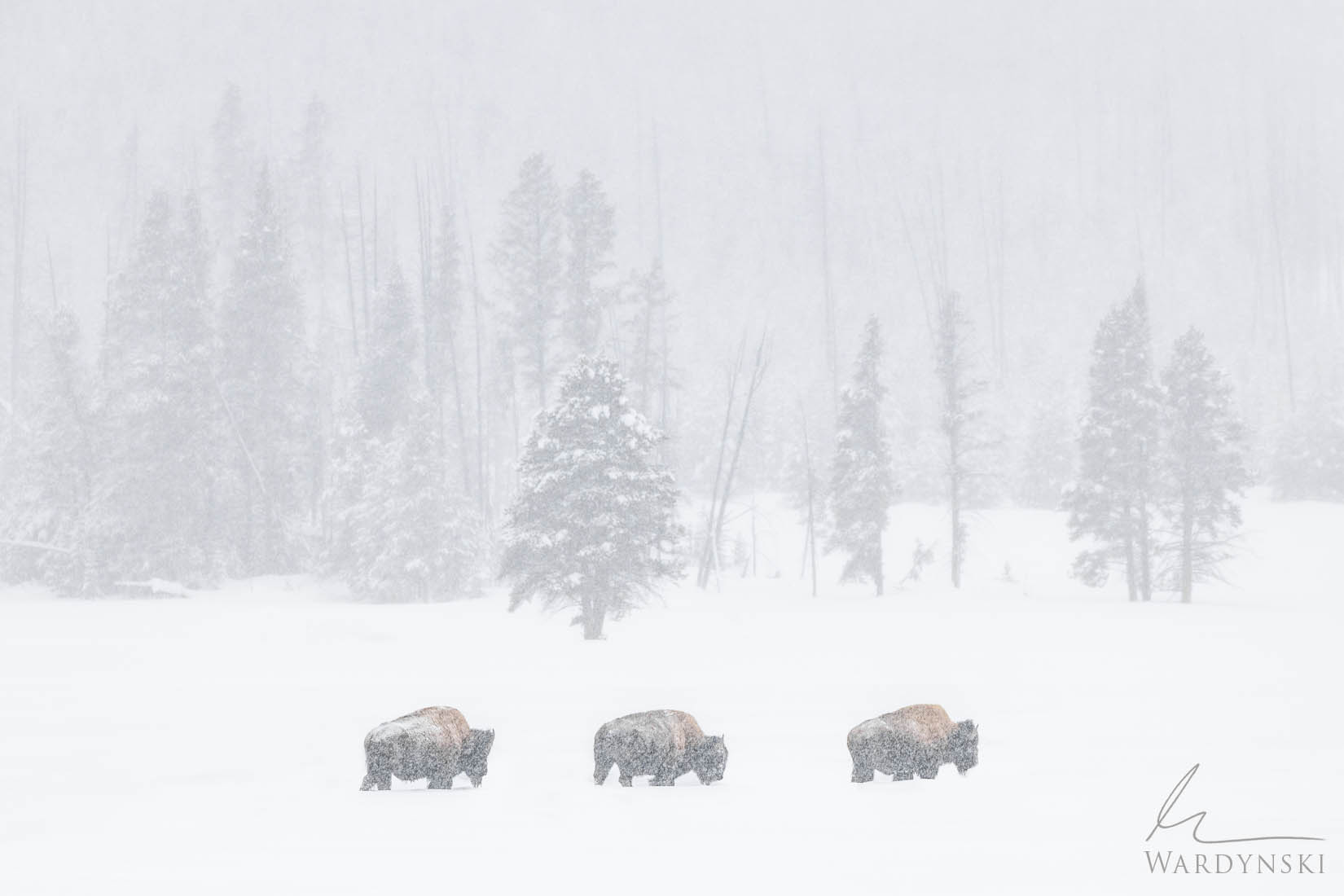
The park is essentially divided into two main sections during the winter months. The North Entrance, accessible through Gardiner, Montana, is the only park entrance open to regular vehicle traffic year-round. This access allows visitors to reach the Lamar Valley which is known for its remarkable wildlife viewing opportunities. The Lamar Valley is often referred to as America's Serengeti for its abundant populations of bison, elk, and, if luck permits, sightings of wolves. Wildlife photographers will find this area particularly rewarding. The Lamar has wide-open spaces providing unobstructed views of animals in their natural winter habitat.
The majority of Yellowstone's other iconic features, including the Old Faithful geyser basin, the Grand Canyon of the Yellowstone and Hayden Valley are only accessible by over-snow travel from the west entrance in West Yellowstone or from the South entrance near Jackson Hole. (I do not recommend entering the park from the south entrance though, unless it is the only option for you.) Snow-coaches and guided snowmobile tours are the primary means of transportation, offering a unique way to explore the park's snow-covered expanses.
By now you might be wonder what the heck a snow-coach is. Snow-coaches are specially modified busses with massive tires or tracks to navigate deep snow, providing a comfortable and safe journey into the heart of Yellowstone. They are by far the preferred method of travel for photographers as snow mobiles are less comfortable and leave your gear exposed to the elements. Snowmobiles are also much more dangerous because many of the people who join snowmobile tours have never driven one before and there are accidents every single year. Individuals are not allowed to drive their own snowmobiles into the park without a permit and the park only issues one permit per entrance per day. This means that your group will have to win the lottery that is held in August in order to ride into the park without a guided tour. More information about Yellowstone’s snowmobile permits can be found here.
Winter Conditions
The extreme winter weather in Yellowstone can be as unforgiving as it is beautiful. Temperatures can plummet well below freezing, and snowstorms are common. These extreme conditions can certainly add an element of adventure to your photography expedition. The remarkable natural beauty and abundant wildlife make photographing Yellowstone in winter a rewarding endeavor for those prepared to face its trials.
In this article, I'll explore how to navigate the park in winter, where to find its most photogenic landscapes and wildlife, and how to overcome the challenges of winter photography. I'll also compare the experiences of joining a snow coach tour versus participating in a photography workshop, emphasizing the advantages of the latter for those serious about capturing the essence of Yellowstone in winter.
As I delve into the specifics of photographing Yellowstone in winter, remember that this journey requires preparation, patience, and respect for the park's fragile ecosystem and its inhabitants. With the right approach, photographers can capture images that not only reflect the park's majestic winter beauty but also tell the story of a landscape and its wildlife who have to brave the harshness of the season.
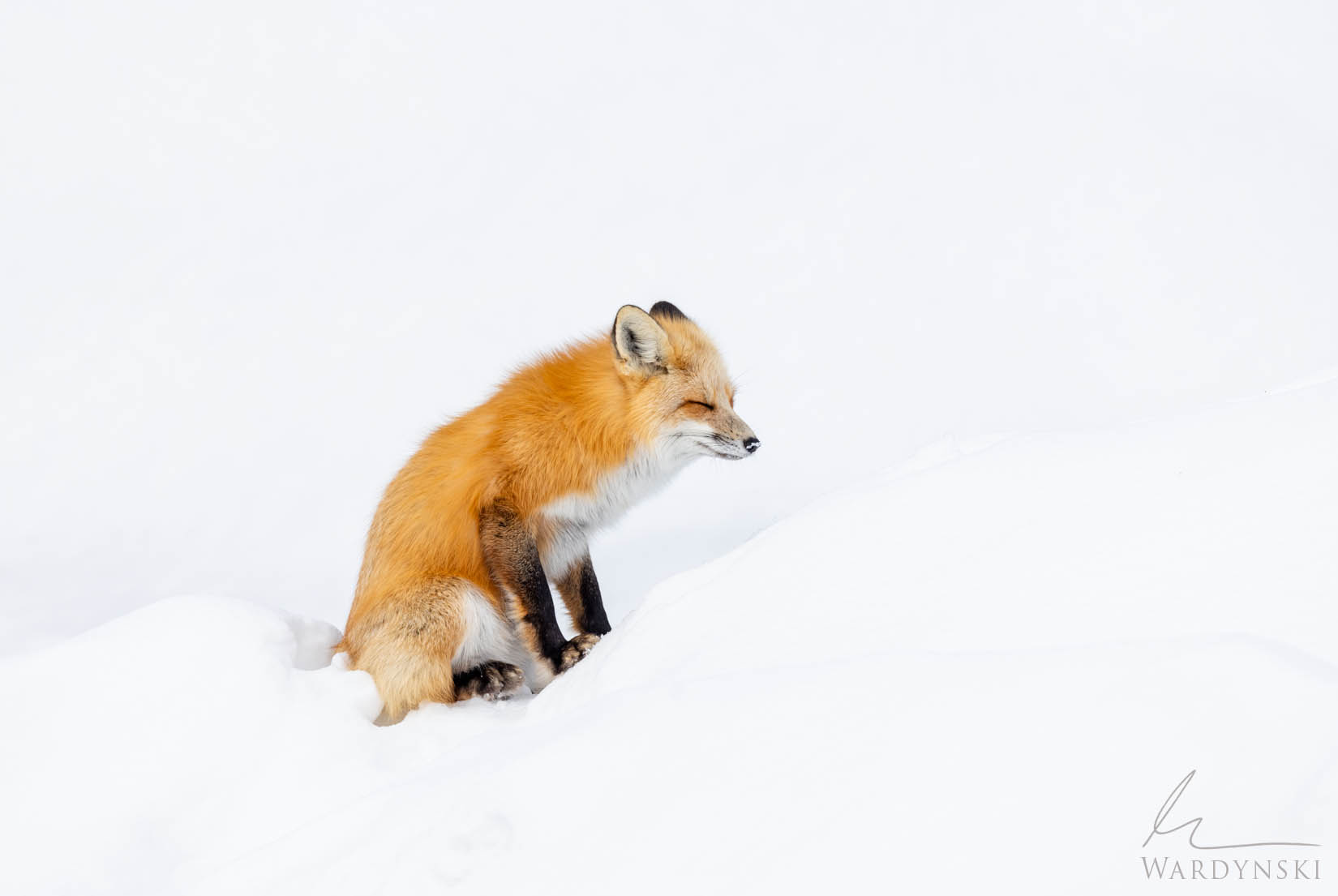
Fox sitting in snow in Yellowstone National Park
Lodging in and near Yellowstone during the winter
There are three common places to stay in and around Yellowstone in the winter. If you plan on visiting the northern part of the park you’ll have to stay in Gardiner MT or the Mammoth Hot Springs Lodge. Gardiner is located just outside of the park gate and has a variety of reasonably priced lodging options as well as a number or restaurants and a grocery store. Most of the restaurants open late and close by 8pm though so keep that in mind when traveling back to the hotel from the far reaches of Lamar Valley.
The Mammoth Hot Springs Lodge is located just inside the north entrance of the park. It’s a convenient place to stay but you’ll pay a premium to stay there and food options will be limited to the lodge restaurant. Gas is also quite expensive within the park boundaries.
If you decide that you’d like to see Hayden Valley, the Grand Canyon of Yellowstone or the Old Faithful Geyser basin, it is best to enter the park via snow-coach from West Yellowstone. West Yellowstone has a wide a variety of lodging options and a number or restaurants as well. Alternatively, you could choose to stay at the Snow Lodge located at Old Faithful. At first glance, this might seem like the obvious choice but I actually prefer to stay in West Yellowstone because it is located at an almost equal distance between Hayden Valley and Old Faithful. Additionally, The Snow Lodge tends to smell like cleaning chemicals. Lodging outside of the park is often cheaper and of better quality than what you’ll find within the park itself.

Winter Wildlife Photography in Yellowstone - Bison
Planning Your Visit
Choosing the right mode of transportation is key to a successful photography expedition. Snow-coaches have large windows, heated interiors and offer a comfortable way to travel through the park. However, photographers should be aware that tours typically follow a set itinerary with limited stops, which will not be conducive to meaningful photography opportunities.
For a more flexible and tailored experience, consider arranging a private snow-coach or join a photography workshop that includes chartered transportation. These options provide the ability to stop more frequently and spend more time at each location which is essential for capturing the perfect shot. A chartered snow-coach can be very expensive so photography workshops tend to be the best option for photographers looking to capture iconic shots while not breaking the bank. Another benefit of taking part in a workshop is your access to a guide who is knowledgeable about wildlife and winter photography. Now…. This seems like a good time to mention that I offer a small group photography workshops that travel into the park via snow-coach. Click here for more information about these these trips, they're a lot of fun!
If you’d like to photograph both the north and south sections of the park, plan on spending at least a week in the region as each section requires two to three days to shoot. Keep in mind that weather and wildlife do not always cooperate.

Bobby socks trees in Yellowstone National Park
Preparing for a Yellowstone Photography Trip In Winter
Photography in Yellowstone during winter requires preparation. Dressing in layers with moisture-wicking base layers and insulated outerwear is essential to stay warm and dry in the park's often sub-zero temperatures. High-quality boots, gloves / mittens, and hats are also crucial for comfort during extended photography sessions outdoors. You can never have enough mega hand warmers either.
Click here to see a full list of recommended gear for a winter photography trip to Yellowstone.
Photographers should prepare their equipment for the cold as well. Batteries drain faster in cold weather, so make sure that they are fully charged and bring extras. It’s a good idea to keep batteries close to your body to keep them warm when not in use. Condensation can be a concern when moving your gear between cold environments and a warm vehicle or hotel room. I keep the vehicle heat relatively low on my workshops to avoid moisture buildup in the camera body and lenses. When transporting your gear back into the hotel it is best to keep your equipment inside a sealed bag so that it can slowly warm up. This precaution can help prevent moisture buildup in your expensive camera gear.
The Magic of Yellowstone’s Winter Landscape
Yellowstone National Park in the winter is a photographer's dream, offering a surreal landscape of steaming geothermal features set against a backdrop of snow and ice. The Grand Canyon of Yellowstone and Hayden Valley are other sights that should be on every photographer’s bucket list.

Geyser in Yellowstone National Park during winter storm
Geothermal Features in the Snow
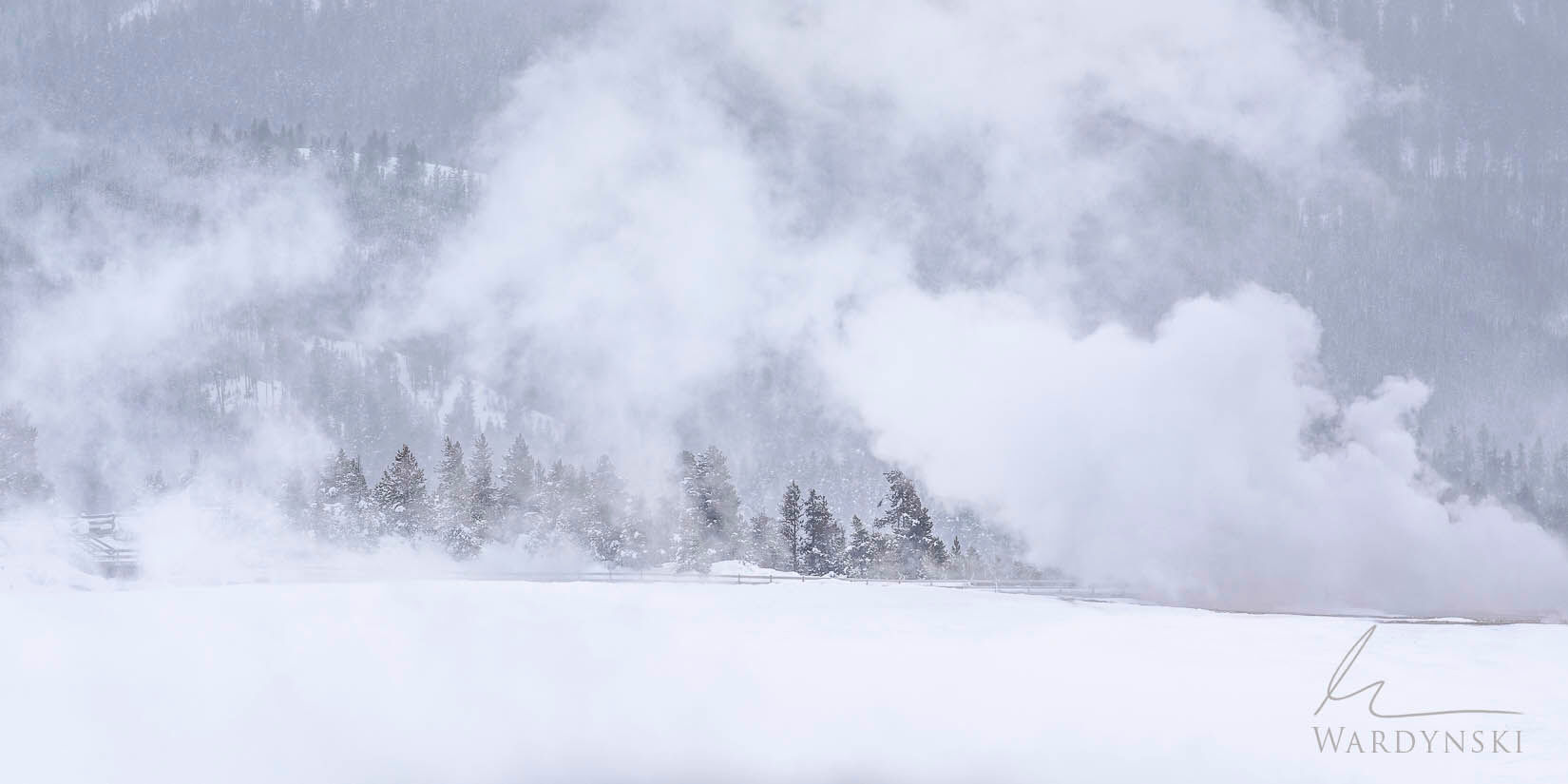
One of the most compelling aspects of Yellowstone in winter is the park's iconic geothermal features. Geysers like Old Faithful erupt against a snowy background while colorful hot springs on Geyser Hill and Biscuit Basin become surrounded by ice and snow. Steam from fumaroles cuts through the crisp winter air to create scenes of ethereal beauty. Don’t let cold temperature detour you from visiting Yellowstone. When temperatures drop well below freezing, the steam collects on nearby trees to create gorgeous sculptures that are out of this world.
To capture geothermal features effectively, it's important to pay attention to the light and steam. Experiment with different angles to capture the steam's shape and movement. Consider using a polarizer filter to reduce glare on hot spring pools, intensify colors and enhance the contrast between the steam and sky if it’s blue.
Most of the park’s geothermal features can only be accessed via snow-coach or snowmobile. If geothermal features are high on your photography hit list, you’ll want to enter the park via snow-coach from West Yellowstone.
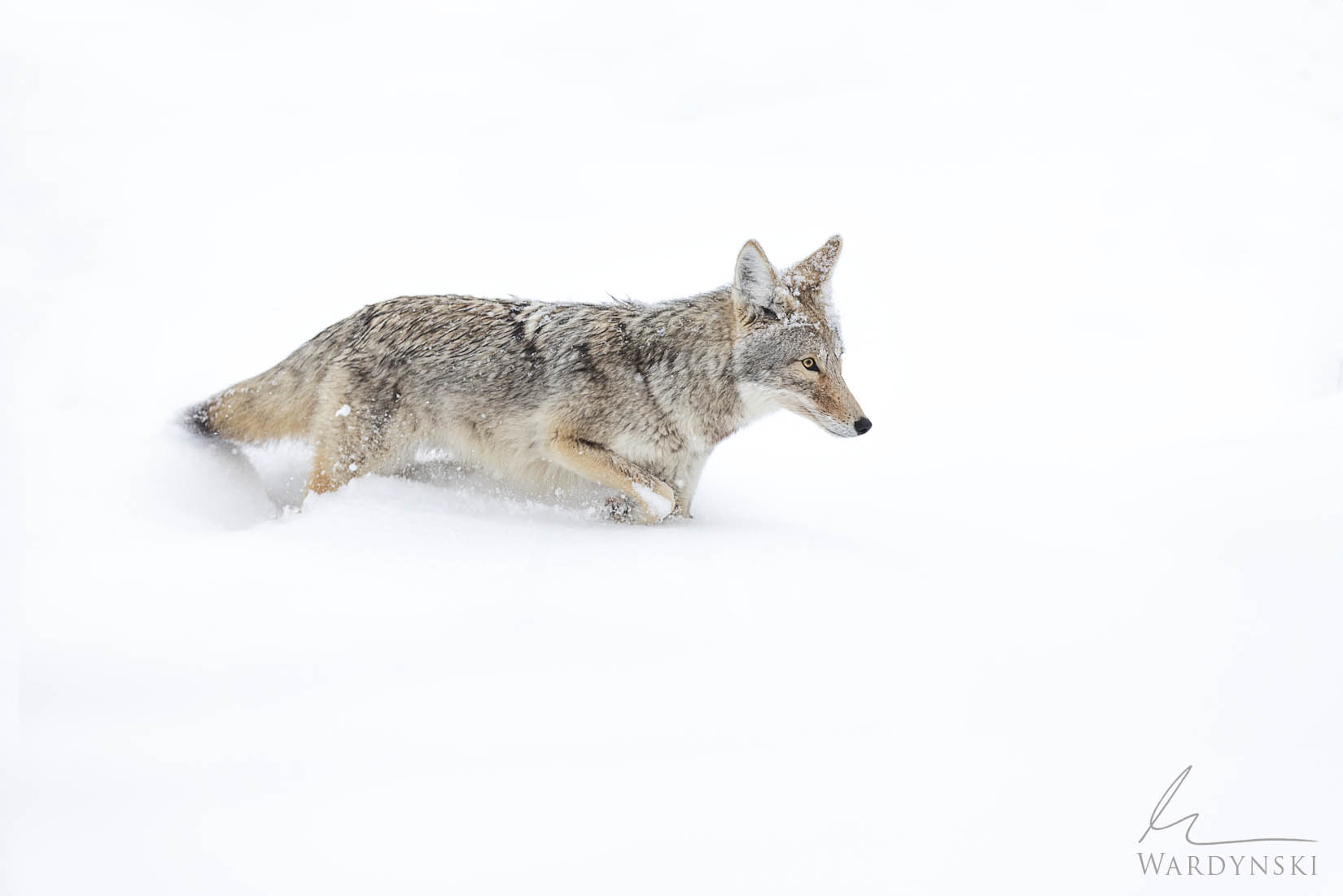
Photographing Yellowstone Wildlife in the Winter
Photographing Yellowstone's Wildlife In The Winter
The winter months provide unique opportunities to photograph Yellowstone's wildlife in a stark, minimalist setting. Animals like bison, elk, and coyotes stand out against the snow, making it easier to spot and photograph them. Additionally, the scarcity of food and the need for warmth during the winter can sometimes bring wildlife closer to geothermal areas, offering a rare chance to capture images of animals with steamy backgrounds.
Approach wildlife photography with patience and respect. Use a telephoto lens to capture close-up shots without disturbing the animals. Pay attention to the behavior of wildlife and look for moments that tell a story, such as a bison shaking off snow or a coyote hunting. Always keep a safe distance and follow park regulations to ensure both your safety and the well-being of the animals.
How to Meter For Wildlife In The Snow
The first thing you need to consider when photographing wildlife in the snow is your metering mode. Your camera’s meter is calibrated to neutral gray and the snow is much brighter than that. This means that your photos are going to be under exposed when using the matrix / evaluative metering modes. There’s nothing wrong with using these modes as long as you compensate for the bright snow by over exposing the meter by one to two stops. Use your camera’s histogram and highlight warnings to help properly expose the image. Spot metering will give you close to proper exposures for wildlife in snow but it may also over expose the snow quite a bit if the animal is dark.

Red Fox in Winter Snow
Camera Gear For Photographing Yellowstone In The Winter
As mentioned earlier, the winter conditions in Yellowstone can be quite intense. It’s always a good idea to bring a second camera body just in case your main camera should fail you. If you do not own a second body, I highly recommend renting one from LensRentals. Use discount code Naturemike15 for a 15% discount on equipment rentals. When shooting with two cameras it is ideal if they are the exact same camera for easy navigation of the controls.
LENSES
A second body is not just a backup. I actively shoot with two cameras when photographing wildlife. One camera has a 600mm f/4 prime lens and the other has a 100-500mm zoom. The 600mm is my go-to lens due to its sharpness, fast focusing speed and wide aperture. The 100-500mm zoom is useful when wildlife is very close. I carry both cameras on a Black Rapid double camera strap so I have quick access to whichever lens I need. A 1.4x extender is also highly recommended for Yellowstone wildlife photography. I typically keep one in my jacket pocket. The 2x extender degrades the quality of the image significantly and is not recommended unless absolutely needed.
In addition to epic wildlife lenses, you’ll also want to bring a wide and midrange lens to capture the geothermal areas and snow covered landscape.
BIG LENS NOTE: While I love my 600mm prime lens, I must admit that shooting with a big lens is not for everyone. Large lenses are heavy which can make hand holding difficult and setting up a tripod might cause you to miss shots. There is nothing wrong with using a telephoto zoom if you do not want to battle a larger lens.
TRIPODS AND MONOPODS
Camera stabilization is a very personal thing and there on many schools of thought when it comes to using a tripod for wildlife. I highly recommend bringing a sturdy tripod and potentially a monopod on your Yellowstone photography trip. With that being said, many of the photos that you have seen in this article were taken hand held. If you know that you have a shaky hand or that you simply cannot hold a big lens, then you most certainly should be using a tripod or monopod. When I photograph Yellowstone, I bring a regular ballhead (RRS BH-40) for landscape photography and a gimbal head for wildlife photography.
The reason I hand hold many of my shots is because I typically try to get a solid shot before I waste time wrestling with a tripod. I know that I’m strong enough to hand hold a 600mm in good light for a short amount of time before needing additional stabilization. I will often lay in the snow and rest the lens on my bent knees for exceptional stabilization. If it looks like I’m going to be watching an animal for an extended period of time or if the lighting conditions are just too low, I will most defiantly use a tripod or monopod. A good tripod will give you the most stabilization while a monopod with be quicker to set up and potentially give you all the stabilization that you need. If you choose to use a monopod, you may consider attaching the Wimberley MH-100 for superior tracking capabilities.
CLICK HERE TO SEE MY ENTIRE LIST OF RECOMMENDED GEAR FOR PHOTOGRAPHING YELLOWSTONE IN THE WINTER

Maximizing Your Photography Experience in Yellowstone's Winter Wonderland
Photographing Yellowstone National Park in the depth of winter is an endeavor that promises unparalleled rewards such as the serene beauty of snow-covered landscapes and the unique opportunity to observe and capture wildlife in an unreal setting. The challenges posed by the harsh winter conditions are not insignificant, but with preparation, perseverance, and respect for nature's boundaries, photographers can emerge with a collection of images that truly encapsulate the essence of Yellowstone in winter.
To make the most of a winter photography trip to Yellowstone, it's crucial to prioritize planning and flexibility. Accessing the park's two main sections requires understanding and adapting to the limitations of winter travel. Opting for photography workshops over general snow coach tours can significantly enhance the experience as workshops offer the expertise of guides who understand the needs of photographers and are committed to positioning you in the right place at the right time.

Grizzly and Wolf Discovery Center
While nothing replaces the thrill of finding wildlife in its natural habitat, the Grizzly and Wolf Discovery Center in West Yellowstone is certainly worth paying a visit to. The center has a handful of grizzly bears and wolves that make for excellent subjects. Photographing the animals with a clean background can prove to be somewhat difficult but this small preserve allows for intimate photographs of bears and wolves when coupled with a little bit of patients. At the very least, the Grizzly and Wolf center can be a great place to practice your wildlife photography technique.

Conclusion
Photographing Yellowstone National Park in winter is an adventure that demands much but offers even more in return. It's an opportunity to see and capture the park as few people ever do. Whether you're drawn to the dramatic eruptions of geysers, the quiet beauty of a snow-covered landscape, or the intimate moments of wildlife in their natural winter habitat, Yellowstone in winter provides a unique and unforgettable photographic journey. Embrace the challenge, and let the park's winter majesty inspire you to create images that resonate with the beauty and resilience of the natural world.
Visit my workshop page to find out more about West Yellowstone and North Yellowstone winter workshops.