Winter Photography Tips
The winter can be one of the most rewarding times of year for photography. There’s nothing quite as beautiful as fresh coat of snow on a gorgeous landscape. The winter is my favorite time to photograph because the crowds of summer have long disappeared and there’s just something special about photographing a silent snowscape. In this article I’m going to cover some useful winter photography tips that will not only keep you warm but also help get the most out of time spent photographing in the snow. Full disclosure, some of the links in this article are affiliate links but I will never recommend anything that I do not or would not use myself.

Winter Photography Tips
WINTER PHOTOGRAPHY BASICS
Photographing in the winter is much like photographing at any other time of year except for two things. The temperature is much colder and there is often snow on the ground. These two factors need to be taken into consideration in order to ensure that you come away with great images and don’t ruin your camera gear. The next few paragraphs are going to ensure that you don’t make the common mistakes that most photographers do when photographing in the winter.
TIPS FOR PHOTOGRAPHING SNOW
In case you didn’t notice, snow is white and that can be a problem if you’re not prepared with the proper camera settings. The biggest mistake that people make in the winter is severely underexposing their images. The reason this happens is because your camera’s reflective light meter is calibrated to 18% gray. 18% gray is the tone of gray that reflects 50% of light, also known as middle gray.
How to Photograph in the winter
LIGHT METERS AND SNOW
Knowing that snow is white and that the meter is calibrated to middle gray, you start to see the problem. Your light meter will always lie to you in the snow! So how do properly expose an image in the winter time? If you’re a portrait photographer you could consider using an incident light meter. Incident light meters measure the amount of light hitting the meter instead of the amount of light reflecting off of the subject. Unfortunately, an incident light meter will be of little use to a wildlife photographer because the meter needs to be in the same location as the subject which is problematic.
The good news is, there’s a trick you can apply to achieve good exposures in the snow using your camera’s built in reflective light meter. The general rule of thumb is to over expose the meter by one to two stops. when using matrix / evaluative metering modes. Usually, one and a third to one and two thirds over exposed is pretty good. The exact amount will depend on how much snow is in the photo and how bright it is outside.
how to photograph in freezing weather
If you shoot in a semi-auto mode such as aperture priority, shutter priority or auto ISO you can simply use your camera’s exposure compensation to overexpose the meter. If you are shooting in full manual mode, you can use any combination of ISO, aperture or shutter speed to bring more light into the image.
Alternatively, you can set your meter to spot metering so that you meter off of the subject instead of the snow.
USING HISTOGRAMS IN WINTER
Choosing the exact amount of over exposure for your cameras meter can be tricky in a snowy environment for a couple of reasons. First, your eyes might not be giving you the best information because there’s a good chance that they will be dilated from the bright environment. Secondly, the image that you see on the LCD screen and the electronic view finder is relative to the amount of brightness set on the screen.
Lucky for us, modern digital cameras have a couple of tools built in to assist. The histogram is your best friend in the snow and will let you know if you are severely underexposing your photos. Like most forms of photography, the goal of the photographer is to push the right edge of the histogram towards the right side of the graph. It’s not uncommon to see photographer underexpose an entire shoot by two stops because they were not paying attention to the histogram. The images might look bright on the camera while you’re out in the field but could look quite darker once they are viewed on a computer monitor. To avoid severely underexposed images, the right side of the histogram should be no lower than one sixth of the way down from the right edge and in many cases, it should be touching the right edge.

proper winter exposure histogram example
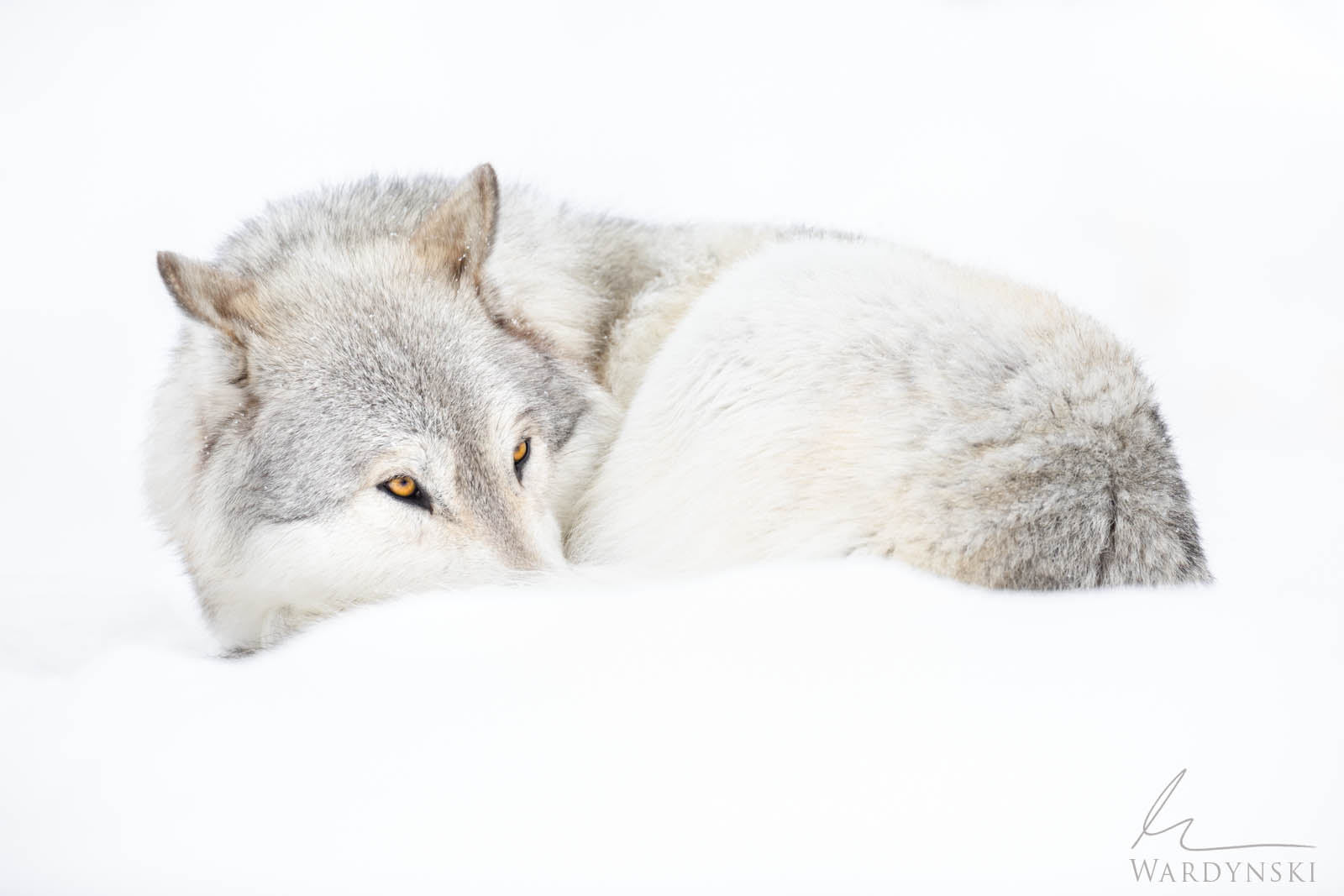
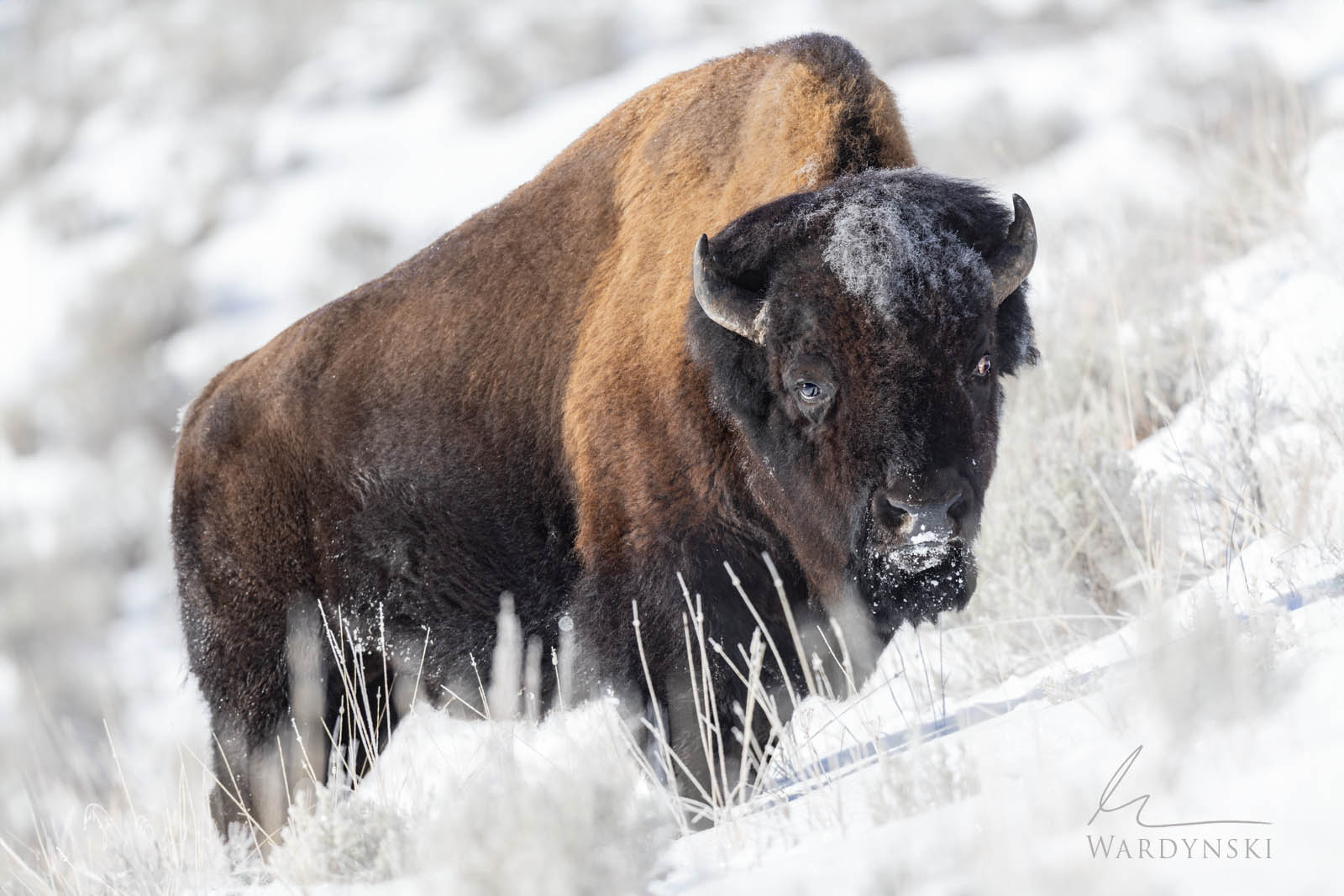
There will be times where you want to intentionally blow out the snow. An example of this would be when you want to properly expose a dark animal in fresh clean snow on a bright day. There is little to no detail in the snow as it is so why would you try to properly expose it at the cost of underexposing your subject? In this case, you can push the histogram right up the right side of the graph and know that the snow might be unrecoverable but that could very well be a very good look. Be careful overexposing snow that is not fresh though because there will be more tones in the shadow areas and you want a clean gradient when transitioning from white to shadow.
OVEREXPOSURE WARNING ALERTS IN WINTER (Blinkies)
The overexposure warnings in playback are another useful exposure tool that I highly recommend utilizing in snowy environments. The highlight alert will flash between black and white when the camera detects an area of the photograph that is overexposed. (No detail)
One thing to keep in mind is that the area that is flashing is related to the jpeg preview, not the actual RAW file, so if you’re shooting in RAW you will actually have more room to go brighter than the highlight alerts indicate. Furthermore, your camera’s picture style (contrast, saturation, ect.) will impact when the highlights become overexposed. So, the highlight alerts are more of a guide than an absolute truth. They are very useful though and you should consider using them.

I typically like to expose the image until I start to see a small amount of flashing in the playback image. This tells me that I have as close to a perfect exposure as possible on a bright sunny day in the winter. What I typically don’t want to see is the entire area around my subject flashing. There may be times where all of the highlights in this scenario are recoverable but there will undoubtably be times where details are lost.
DEALING WITH FALLING SNOW
One of the best parts of winter is the snow. Also, one of the worst parts of winter is the snow. A small amount of falling snow can make for incredible photos with beautiful winter atmosphere. A lot of falling snow can make shooting darn near impossible because at a certain point auto focus is will no longer work. Instead of focusing on your subject AF will focus on the snowflakes. Snow will also get in the way of your subject. For example, if you’re shooting an animal, you do not want a giant flake of snow falling right In front of its eye. The best practice is to place your camera in burst mode (continuous) and fire off a number of shots to help ensure you get a shot where the subject is not being obscured in some unpleasing way.
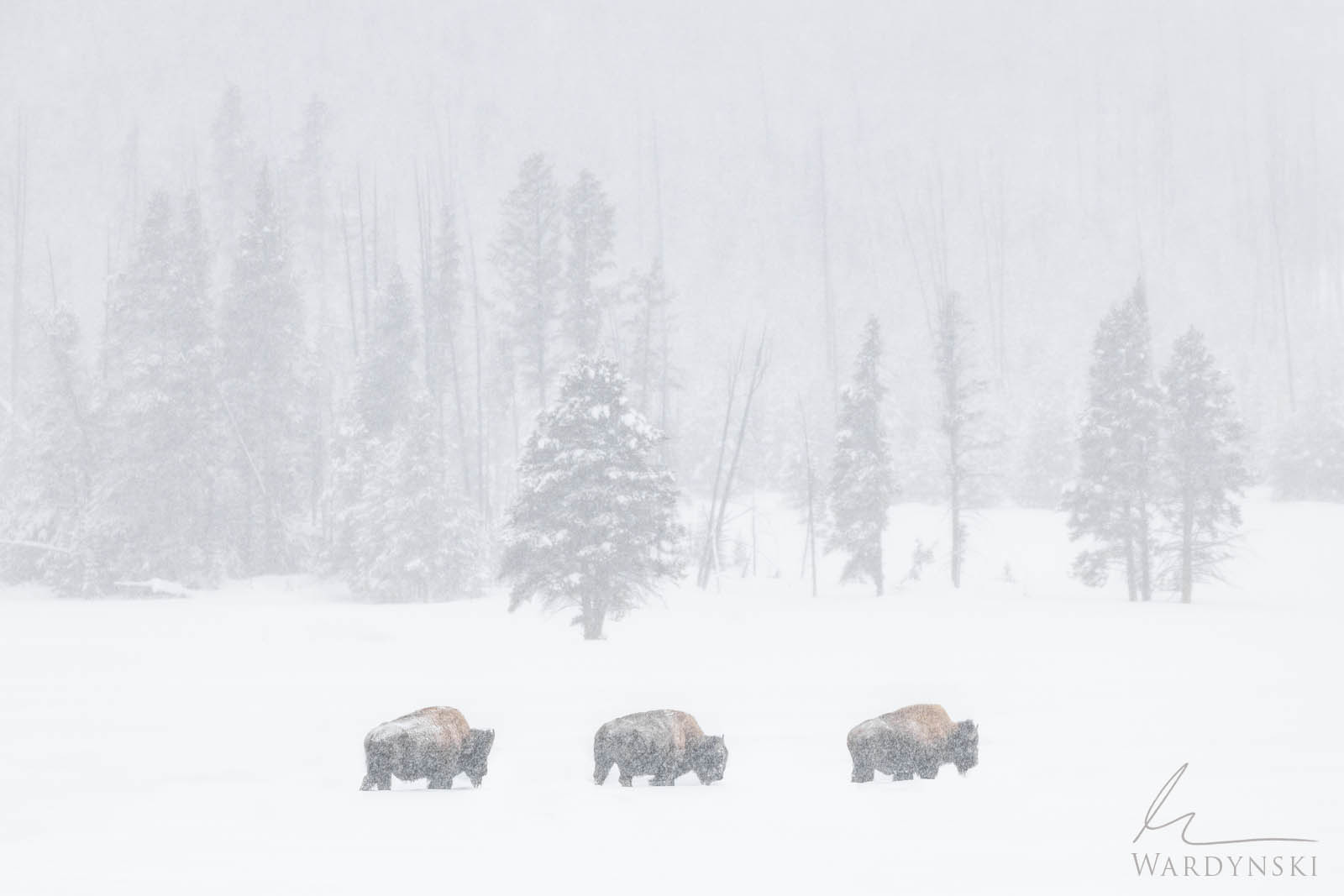
If you are lucky enough to have a tripod and a steady subject, the best approach for shooting in heavy snow will be to try and manually focus on your subject between the snowflakes. To do this, digitally zoom into the image and rack the focus back and forth until your subject gets as sharp as possible. Make sure that AF is set off because the shutter button will cause the image to focus on the snow again if you’re set to shutter button AF.
If you do not have a tripod and or your subject is moving, it is best to try autofocus first and hope that it catches on the subject. Refocus regularly because you might think the image is sharp when looking though the viewfinder only to find out later that the focus missed due to the snowflakes. If AF is simply not working you can try to focus manually like mentioned above but it’s much harder to do this when handholding the camera.
FILTERS FOR WINTER PHOTOGRAPHY
While polarizing filters are not specific to winter photography only they can be very useful when photographing snow covered landscapes. A polarizer will reduce glare, help saturate colors and darken the sky when shooting at an angle to the sun. My polarizing filter of choice is Breakthrough due to build quality, low profile, neutrality and warranty. Keep in mind that PL filters will cut about a atop of light so they should not be used for low light wildlife photography or at any time where a fast shutter is desirable.
UV filters don't do anything in terms of image enhancement but they do protect your lens from getting scratched and smudged. If you are shooting in a snowstorm or in blowing snow, it might not be a bad idea to use a UV filter since you might have to regularly wipe moisture from the front of the lens.
You may consider removing all filters if you plan on shooting in the direction of the sun. This is because filters will produce more artifacts when shooting directly into a bright light source.
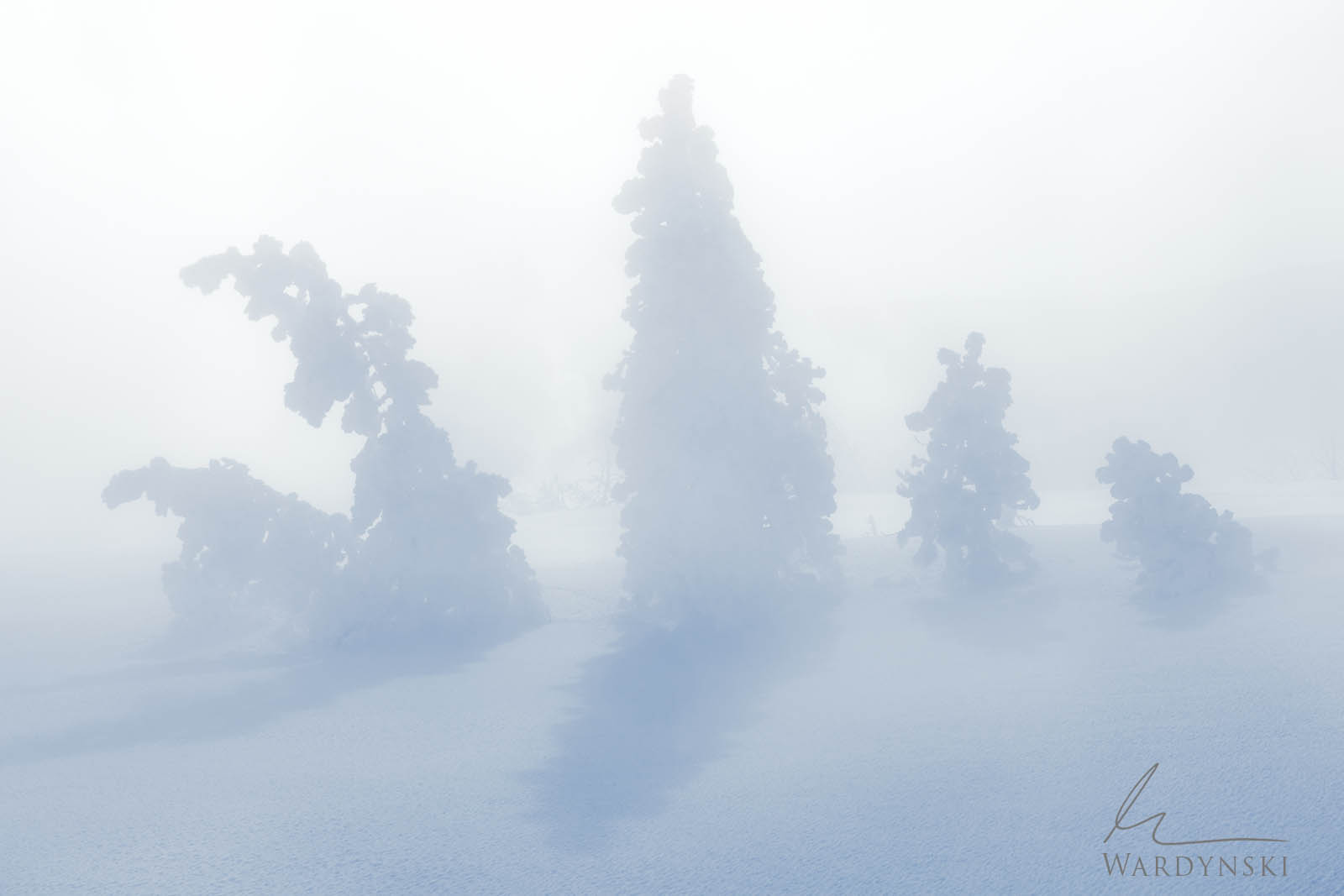
IS IT SAFE TO USE YOUR CAMERA IN BELOW FREEZING TEMPERATURES DURING THE WINTER?
Technically no, if you listen to the camera manufacturers, but what do they know??? Most cameras are only certified to work in temperatures as cold as freezing. Anything colder and you have most likely voided a warranty. (Assuming they find out of course)
So, here’s the good news. I have shot in temperatures below -30˚ F and I also lead workshops in Yellowstone every single winter. Not only have I never had a camera fail on me, I’ve never had a workshop participant’s camera fail either. There are some special precautions that you should take though. Keep reading!
HOW TO PROTECT YOUR CAMERA GEAR IN THE WINTER
There’s no issue with taking a warm camera into a freezing environment but you need to be especially careful when taking a cold camera into a warm environment because cold items produce condensation when they warm up too fast. Think of a cold can of soda on a summer day. You defiantly do not want that happening inside your camera or within your lenses.
To protect your gear, put your camera and lenses in the camera bag and zip it up before entering a warm vehicle or building. Allow your equipment to gradually warm up to room temperature. If you are traveling and plan on shooting more, it’s a good idea to remove the battery for charging and possibly memory cards if you want to look at your photos from the day.
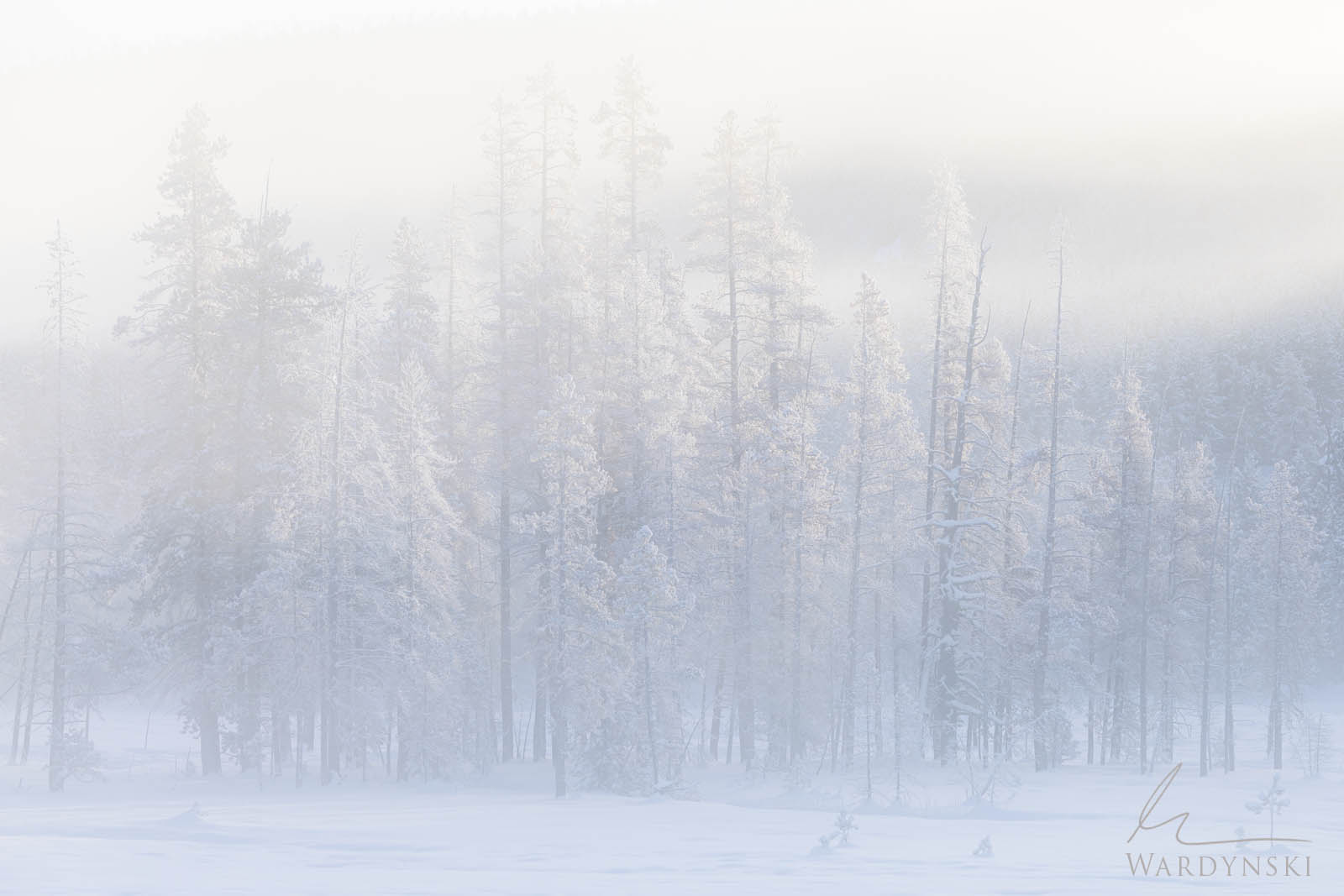
How to protect your camera in the winter
The amount of time that it takes for your camera to warm up will depend on how cold it is outside, how much time you spent outside and how warm it is inside. As a general rule of thumb, it’s a good idea to wait a minimum of three hours before opening your camera bag. If you open the bag and feel the camera is still quite cold, zip it back up and let it continue to thaw out.
If you have been out shooting in the cold and don’t have your camera bag or lens bag for some reason you can always place your camera on the floor and cover it the best you can with a thick winter jacket to allow it to gradually warm up.
PROTECTING YOUR CAMERA FROM SNOW AND RAIN
Snow is made of water. Cameras a filled with electronics and you can see where I’m going with this. Even if your camera is weather sealed, weather sealed does not mean waterproof. It is wise to invest in a camera raincoat to help protect your gear from the elements. I leave one of these in my camera bag at all times for my everyday lenses. I have one for my 600mm prime as well.
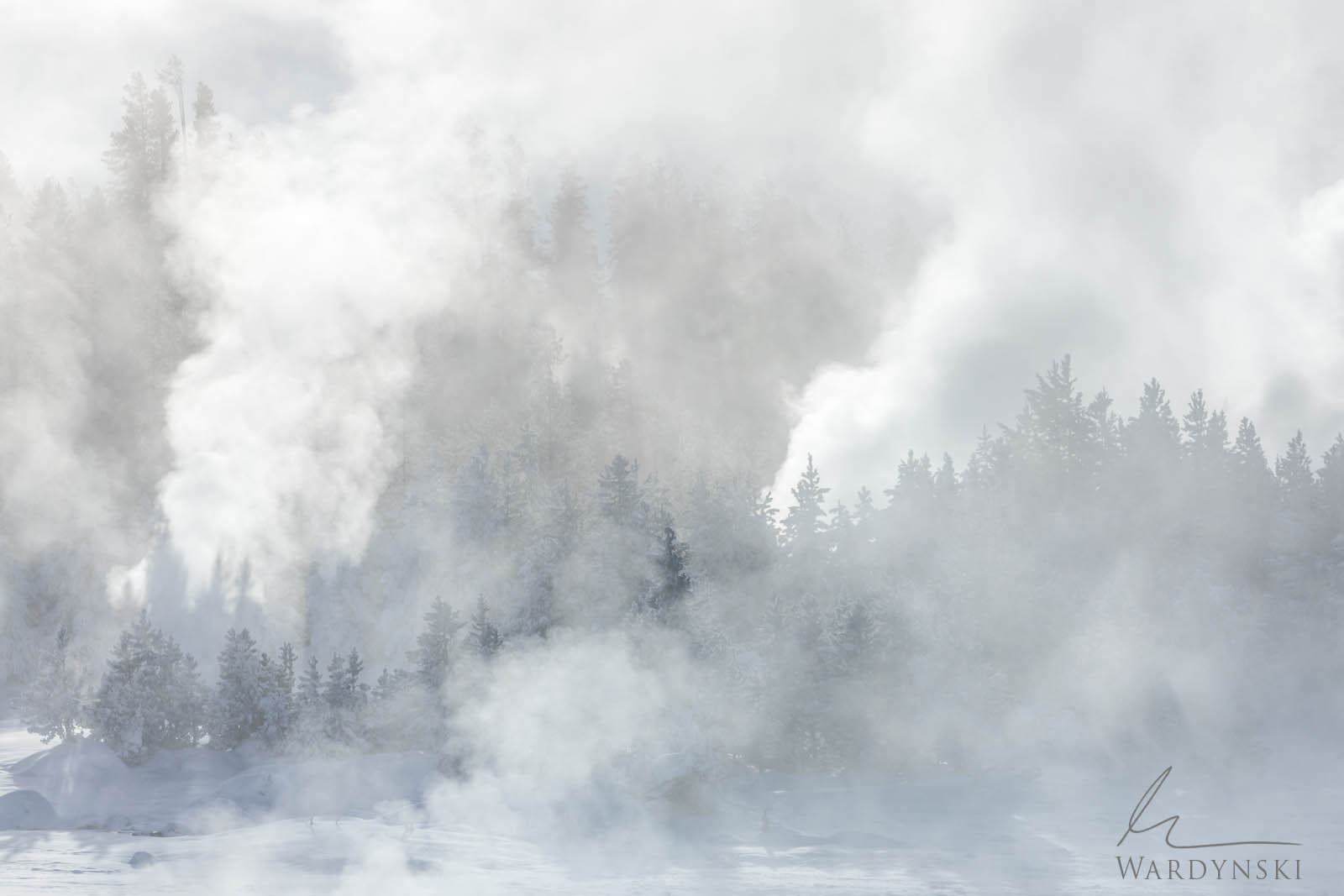
How to protect your camera in winter
COLD METAL & PLASTIC
Metal and plastic are much more brittle in extreme cold temperatures. Be careful then adjusting your tripod in the extreme cold. If it becomes frozen it might be best to let it warm up and melt before trying to adjust it any further. Also be careful if you get a tripod leg wedged in a rock. You certainly don’t want to snap a leg off!
STAYING WARM WHEN PHOTOGRAPHING IN WINTER
If you do not have the proper winter gear, you’re going to hate winter photography, but if you take my clothing advice, you’re going to love it! Staying warm and dry is absolutely essential. If you are not warm and dry, you’re not going to get good photographs.
Dressing in layers is the key to staying warm. The climate that you’re going be photographing in and your internal body temperature will dictate how many layers of clothing that you need. It’s always best to be prepared for colder temperatures than you expect because you can always shed a layer if needed. Throughout this article, I’m going to prepare you for photographing in zero-degree Fahrenheit temperatures and colder because that is when is absolutely essential to have the right winter gear.

The best winter snd cold weather photography jacket
THE BEST WINTER PHOTOGRAPHY CLOTHING TO KEEP YOUR CORE WARM
When photographing in extreme cold conditions where the temperature drops below zero Fahrenheit, I always wear a pair of long john underwear. Since I wear so many layers, I often just wear a T-shit over the long john top. The next layer is a medium weight puffy jacket. This layer can be down or synthetic. My top three mid weight jackets for men order of least to most expensive are Eddie Bauer CirrusLite Down Jacket, The North Face Flare Puffer and Rab Microlight Alpine jacket. My top medium weight women's jackets are the NORTH FACE Women’s Aconcagua Down Insulated Hoodie and the NORTH FACE Flare Puffer.
My outermost layer is the Stellar Equipment Guide Down Parka. This jacket is extremely warm, lightweight and comfortable. It has four large pockets on the outside that are useful for holding mittens, hand warmers and camera accessories. The Guide Parka is an excellent jacket for travel due its packability and relatively light weight.
KEEPING YOUR LEGS AND FEET WARM IN WINTER
As mentioned above, I always wear long john underwear when heading into extreme cold. When it comes to pants the best options are pants that are insulated and quick drying. Eddie Bauer makes affordable men's and women’s fleece lined pants that are perfect for winter exploration. Lastly, I wear a pair of insulated North Face snow pants for an extra layer of warmth and moisture protection.

Best jacket for extreme cold photography
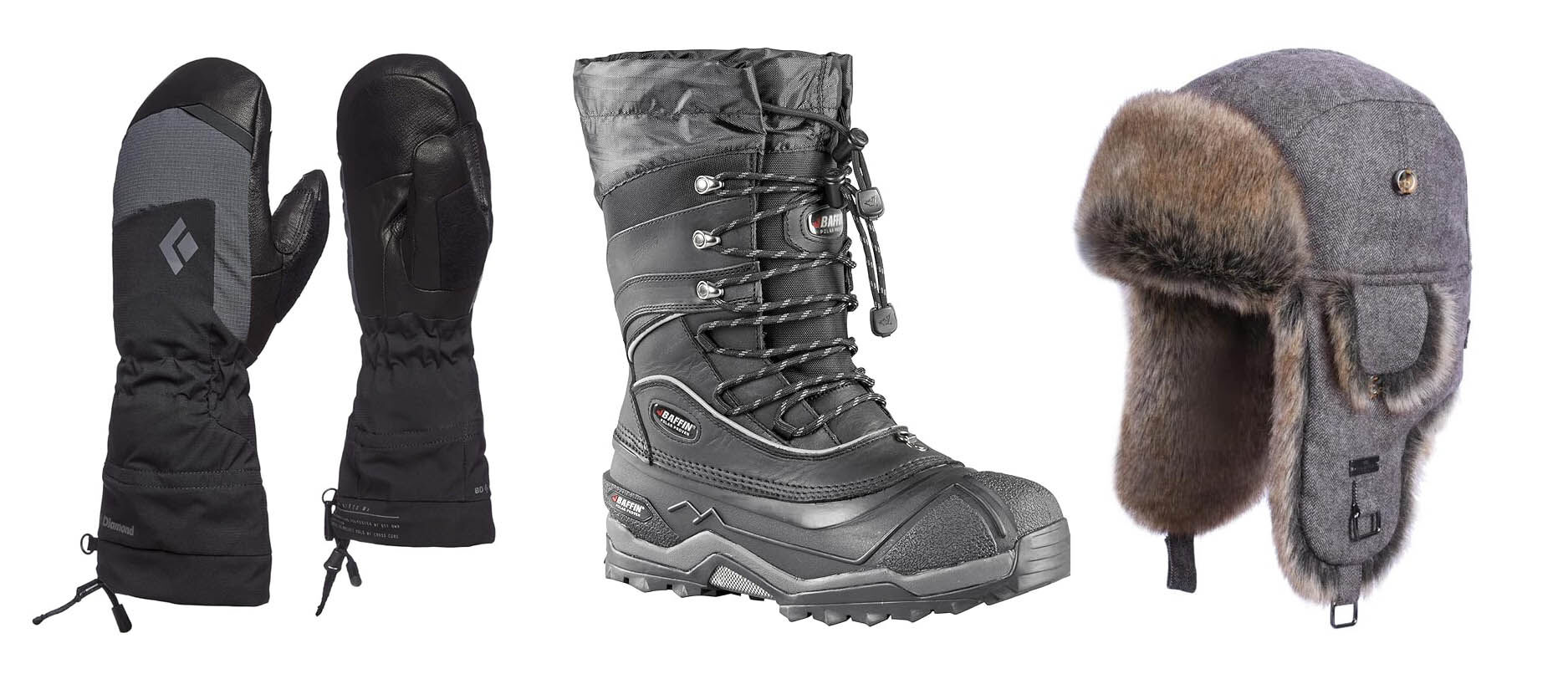
If you’re looking for the ultra-warm boots, Baffin Snow Monster boots for men and or Baffin Icefield boots for women will your best bet. SOREL Caribou boots are another great option if you’d like to save a little cash. The SOREL boots are only rated to -40F whereas the Baffin’s are rated to -95F. Doubling up on thermal wool socks will also help keep your feet warm in the extreme cold.
Gaiters are highly recommended if you will be walking in deep snow or when you will be walking in wet areas because they will prevent snow from getting into your boots and will give you and extra layer of water protection. They can even help keep you dry during shallow creek crossings. Gators come in short and tall sizes. Tall gators will be much more useful for winter time conditions. I use Outdoor Research Crocodile Gaiters.
THE BEST WINTER PHOTOGRAPHY GLOVES, MITTENS, & HAND WARMERS
Keeping your hands warm and dry is one of the most challenging aspects of winter time photography. I have found that the solution that I like best is a thin pair of gloves that have touch screen capabilities and thick mittens such as Black Diamond Mercury Mittens.
Mittens will keep your fingers warmer because they allow your fingers to sit next to each other unlike glove that separate them. Now you might be thinking that it will be impossible to shoot with mitten on and you are correct, but it’s also just about impossible to shoot with thick gloves as well. This is why I choose to use mittens and when it’s time to shoot I will take the mittens off and just use thin gloves accompanied by Zippo electric hand warmers in my coat pockets.
HATS AND FACE COVERINGS FOR WINTER PHOTOGRAPHY
A beanie is often enough to keep you warm in mild winter conditions but you’ll want greater protection in wind and extreme cold. When I know temperatures are going to drop single digits or colder I will often wear a balaclava keep as much of my head and face covered as possible. I also prefer bomber hats over beanies in extreme cold conditions because they are warmer, cover more of my head and can be strapped on so they will not blow of in heavy wind.
OTHER WINTER RELATED PHOTOGRAPHY ITEMS
CLICK HERE TO SEE A FULL LIST OF WINTERTIME RELATED PHOTOGRAPHY ITEMS
CONCLUSION
Winter photography is simply the best. Don’t let the cold scare you out of what could be one of the most memorable photography trips of your life. As long as you are prepared for the cold with the gear that I have suggested in this article, you’re going to have a blast! Winter is the most magical time for landscape and wildlife photography alike. Don’t take my word for it though. Get out there and take some incredible photographs this winter!