Wildlife Photography Tips
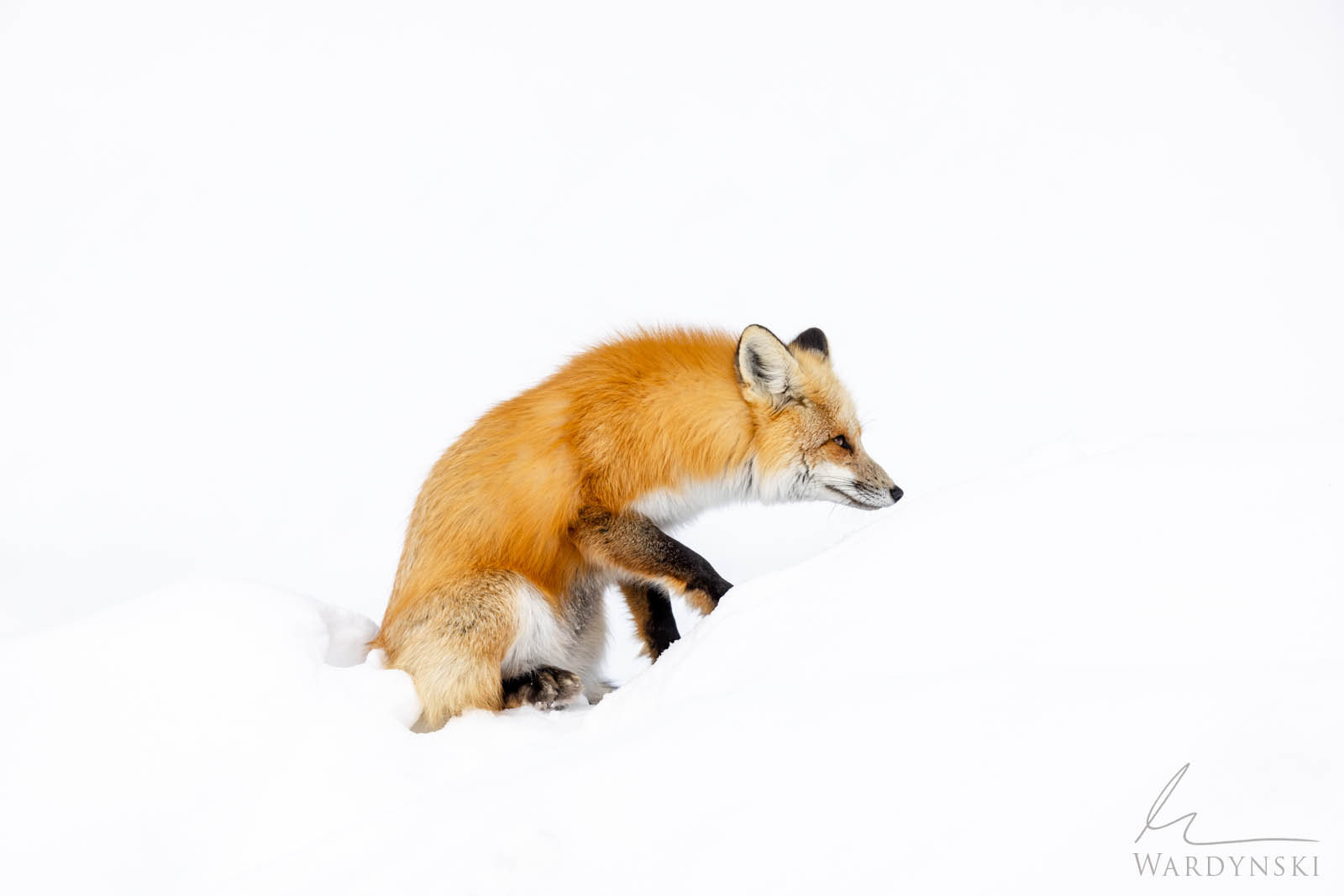
Wildlife photography is one of the best ways to connect with nature. I can think of nothing better than immersing myself in the great outdoors while I attempt to get the perfect shot of an animal. Wildlife photography is actually a lot like fishing. It requires a lot of patience and you’re not going to get great shots every single time. That is what makes wildlife photography so great. It’s hard. You need good light, a cooperative subject and precise timing. In this article I’m going to reveal some tips and tricks for getting better wildlife shots.
Wildlife Photography Research
The creation of a great wildlife photo often starts long before you ever attempt to take it. Knowing your subject and the region that it lives in can have huge advantages. For example, wildlife often migrates to different regions at various times of the year. Other animals hibernate throughout the winter. Always consider the season and how it will affect the astatic of your photos.
If you do not have time to dedicate to researching your subject, you might consider joining a photography workshop to increase your chances of getting unique photographs. Photography guides often know the area and animals better than you will if it is you’re first time visiting a particular region.
Pay Attention To Animal Behavior
One of the best ways to increase your chances of success in wildlife photography is to always pay attention to what is going on. If you’re traveling in a group, try to refrain from too much conversation because talking will distract you from what you’re doing and potentially scare away wildlife. Watching a wild animal can become tiresome at times but never stop looking through the lens because as soon as you do, something very good will happen. I promise! A patient photographer always gets better shots and an impatient one.
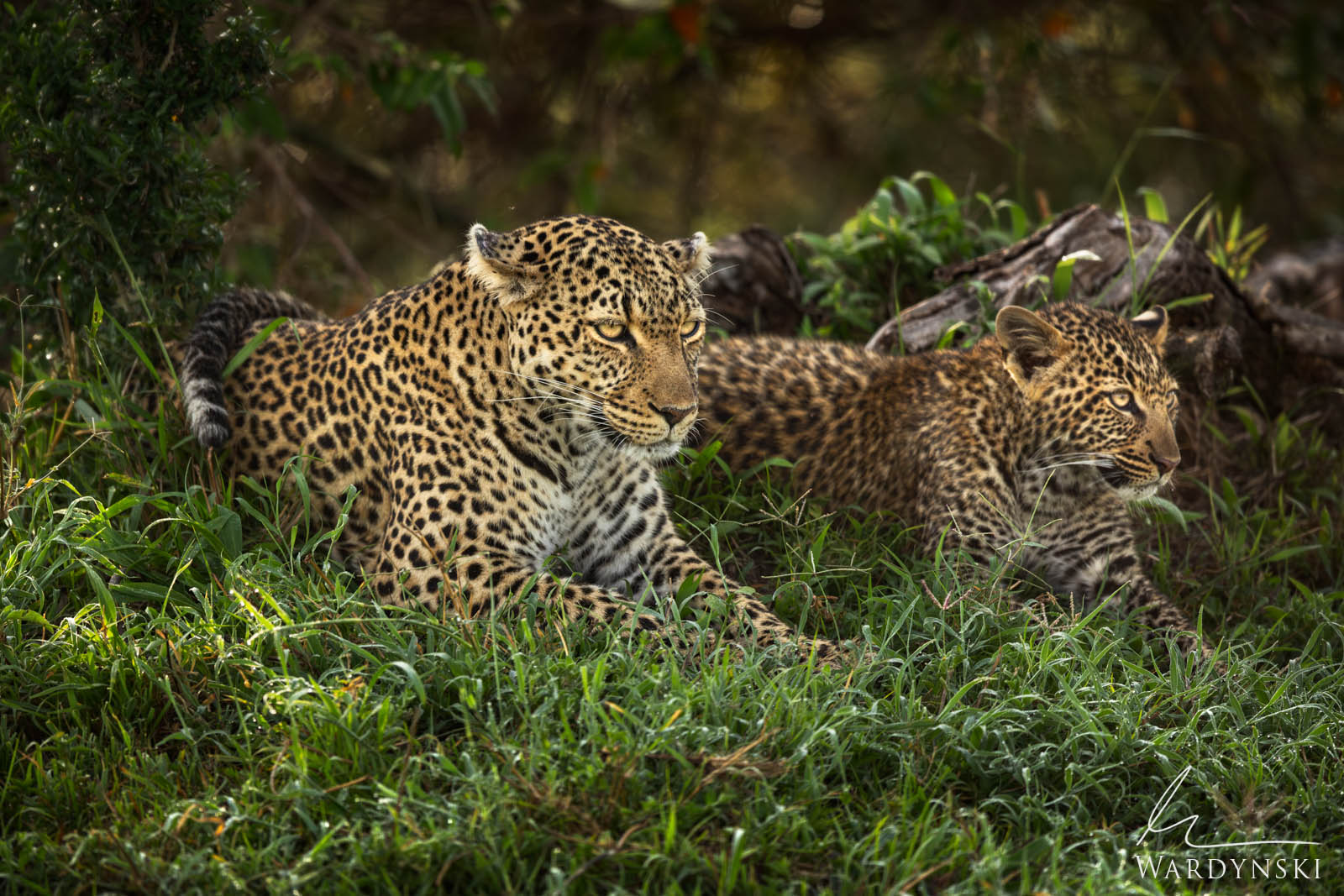
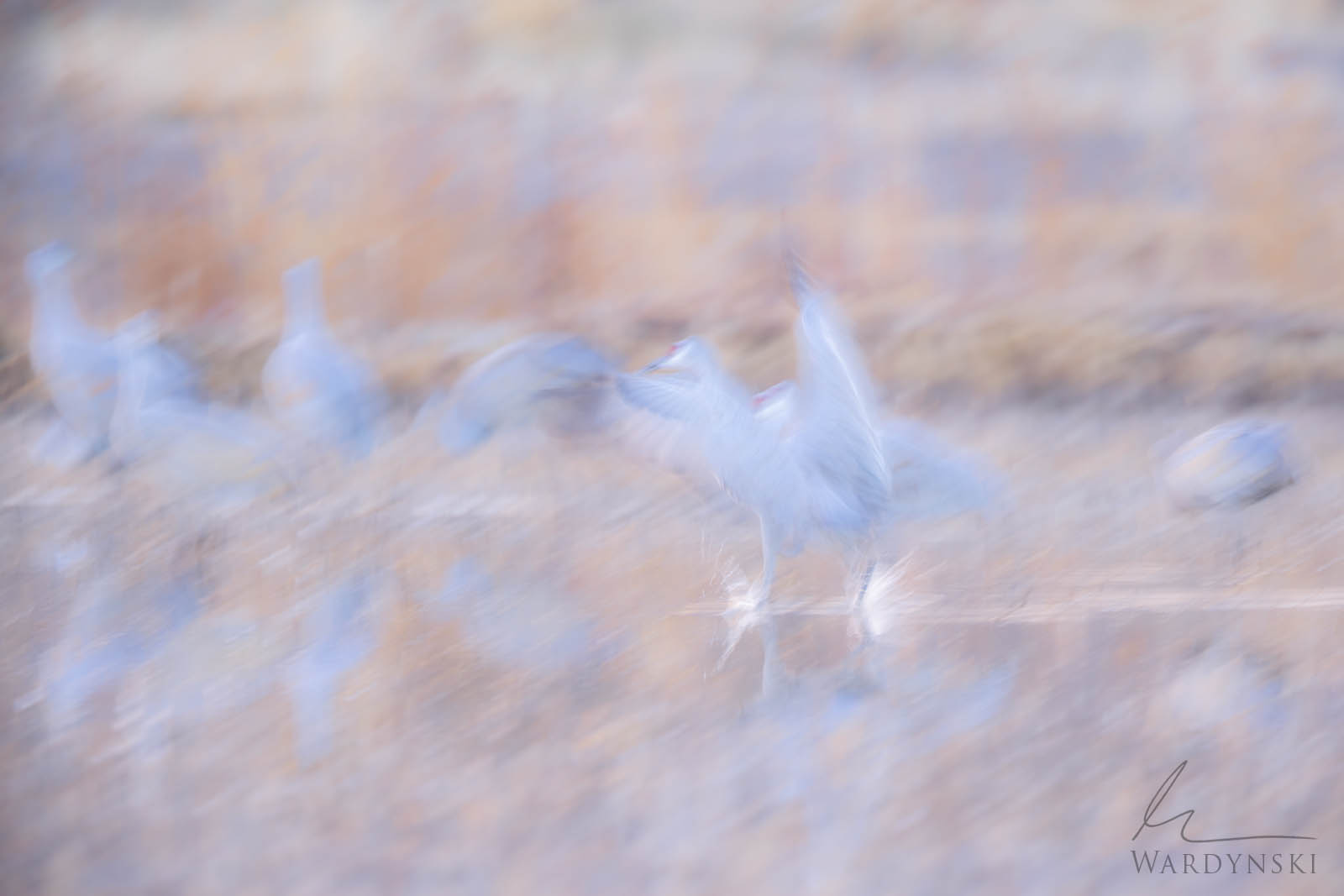
Animals will often give cues when they are about to do something interesting. For example, sandhill cranes lower their head when they are about to take off and leopard cubs nuzzle their mothers after feeding. Paying attention to animal behavior will greatly increase your chances of getting a unique photograph.
Try to predict what direction the animal is going to move in and head in that direction. It’s best to try to get in front of the animal instead of trying to play catchup. Playing catchup will only result in butt shots.
Don’t Rush Wildlife Photography
It’s not uncommon to get excited when you get the opportunity to photograph a wild animal in its natural environment. Try to remain calm, take in the scene and move slowly. Quick movements and talking can scare away wild animals. This is especially true if the animal does not have everyday interactions with people. When you are trying to get close to an animal, walk slowly and take breaks often. Walking directly towards an animal may cause it to view you as a threat. When possible, walk diagonally towards the animal.
Focus On Environmental Photographs and Wildlife Portraits
You should always try to capture a diverse range of photographs no matter what your subject happens to be. When shooting wildlife, consider capturing scenes that help tell the story of the animal. You can do this by including the landscape in addition to the creature you’re trying to photograph. Environmental wildlife photographs often feature animals that are much smaller in the frame and tell a story of the animal and place in which it lives.
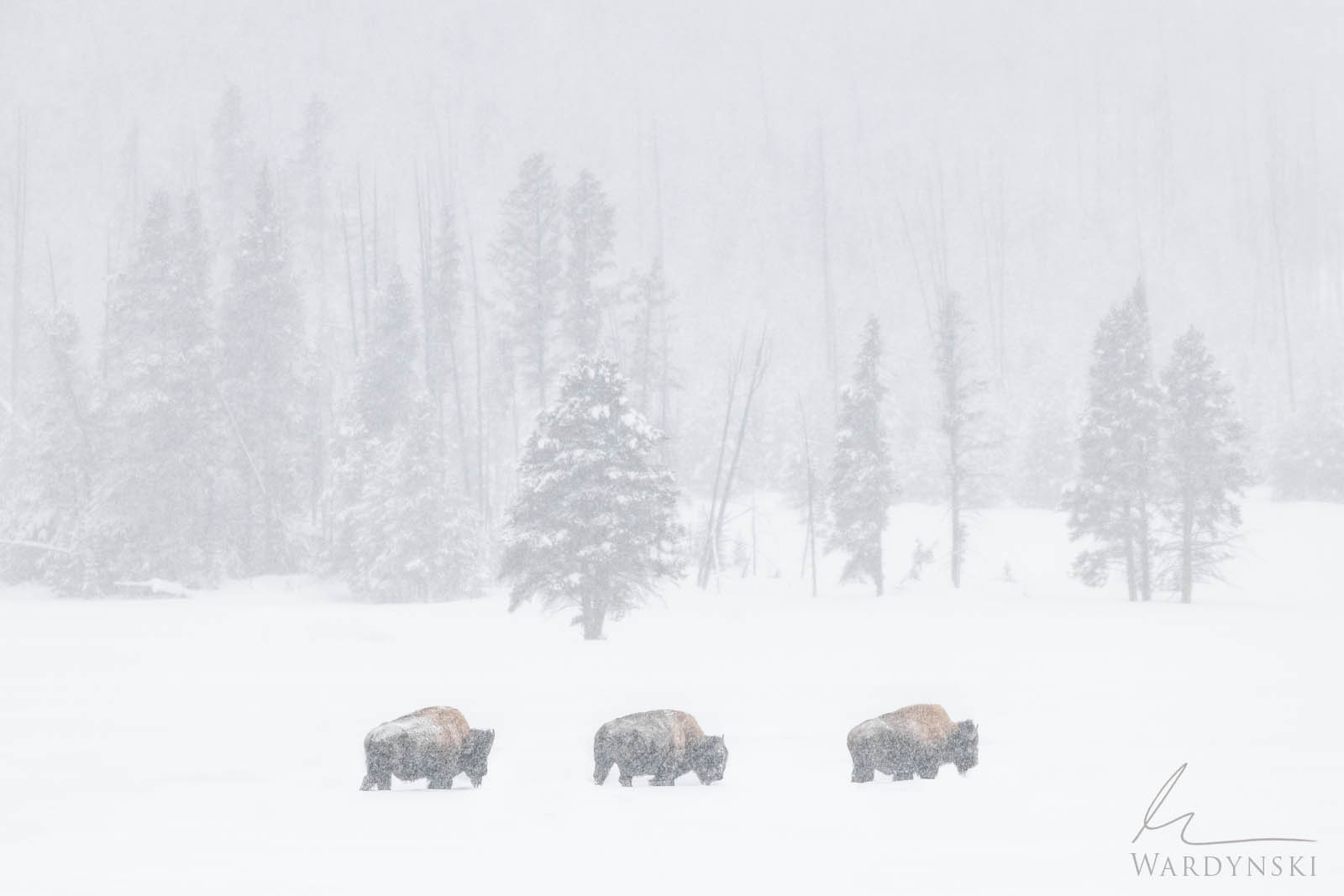
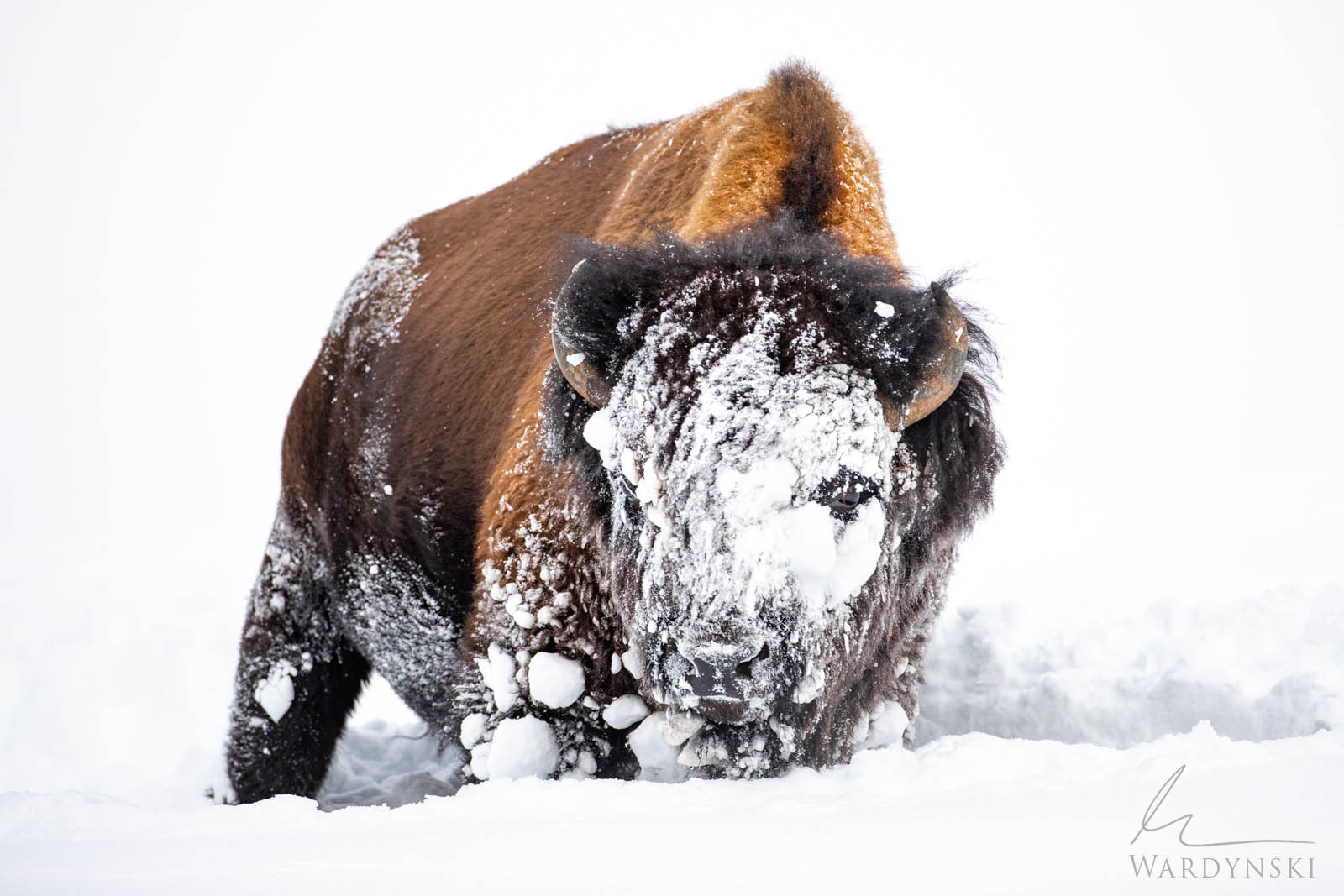
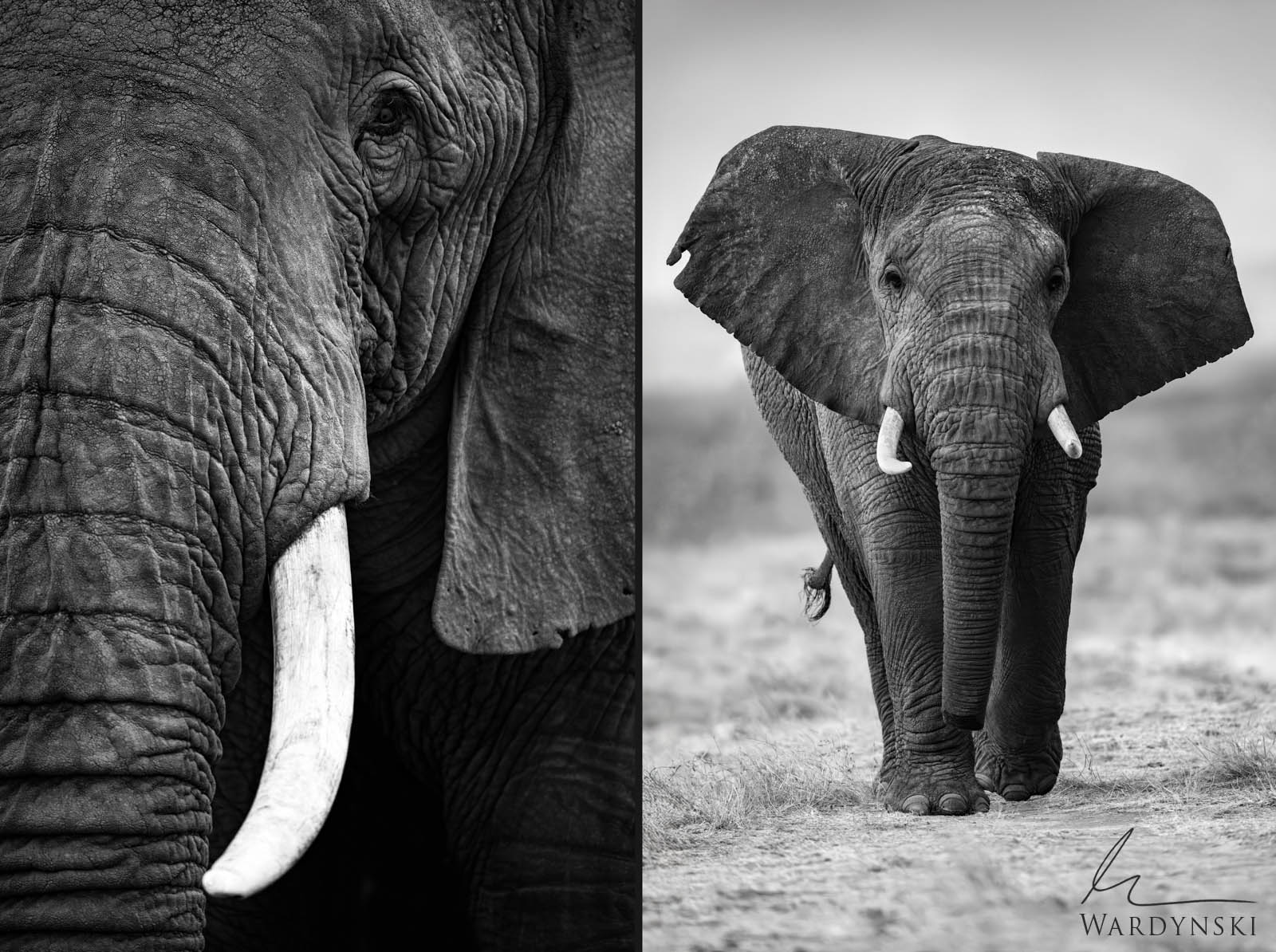
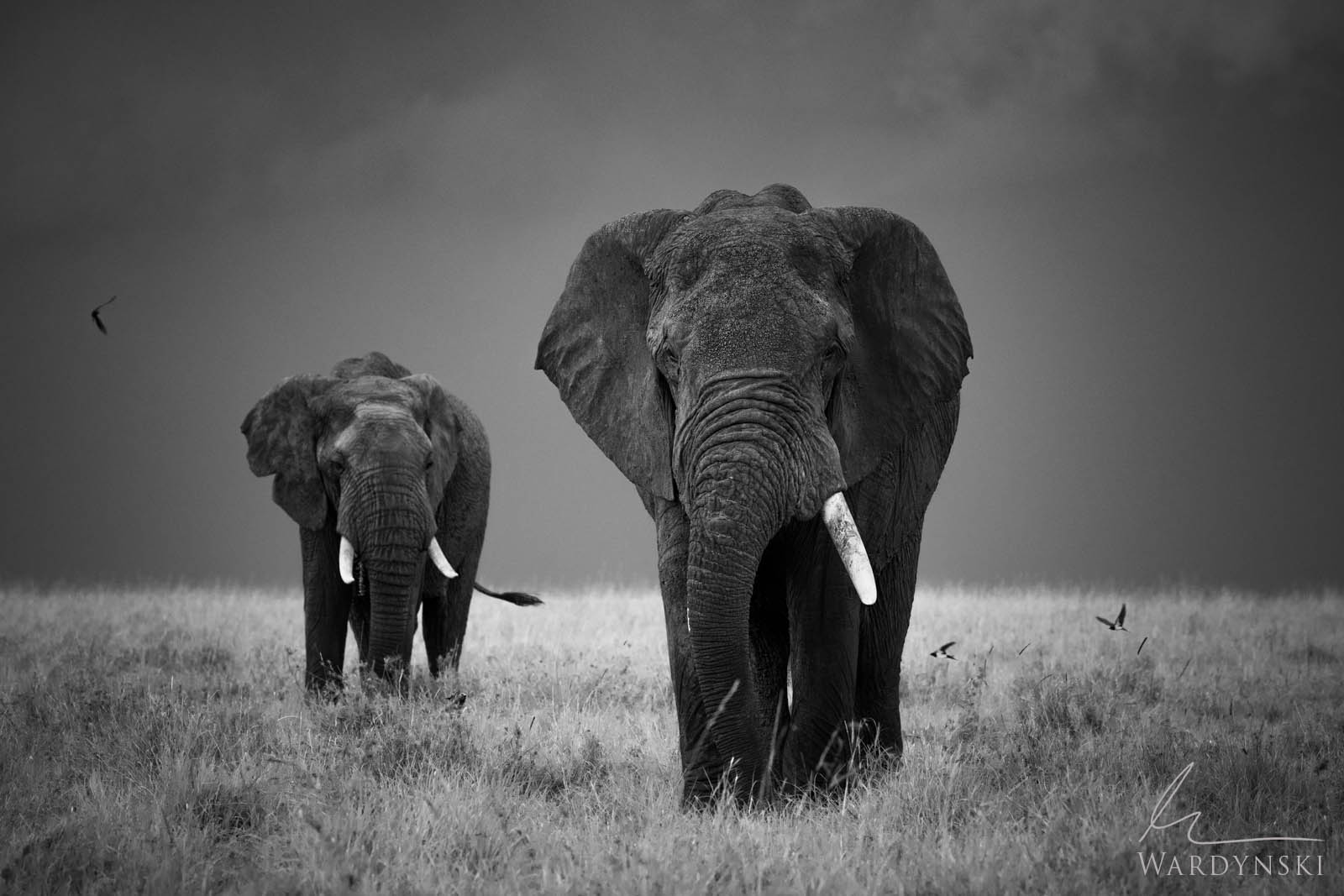
Filling the entire frame with an animal is often a great look but don’t be afraid to shoot with slightly shorter lenses in order to help tell the story you. A tightly framed photograph of a single elephant is great but a photograph of a line of elephants portrays the community life that elephants are known for. A group of bison in a blizzard tells the story of what life is like in Yellowstone in the winter.
For the best results, it is important to constantly analyze the scene. Watch for changing conditions and behavior and actively ask yourself where the best photo is. If the lighting is difficult, it might be best to focus on tighter shots. Remember to look up from the lens once in a while because If you’re too focused on a tight shot, you could miss a great story or interaction.
Watch Out For Distractions When Photographing Wild Animals
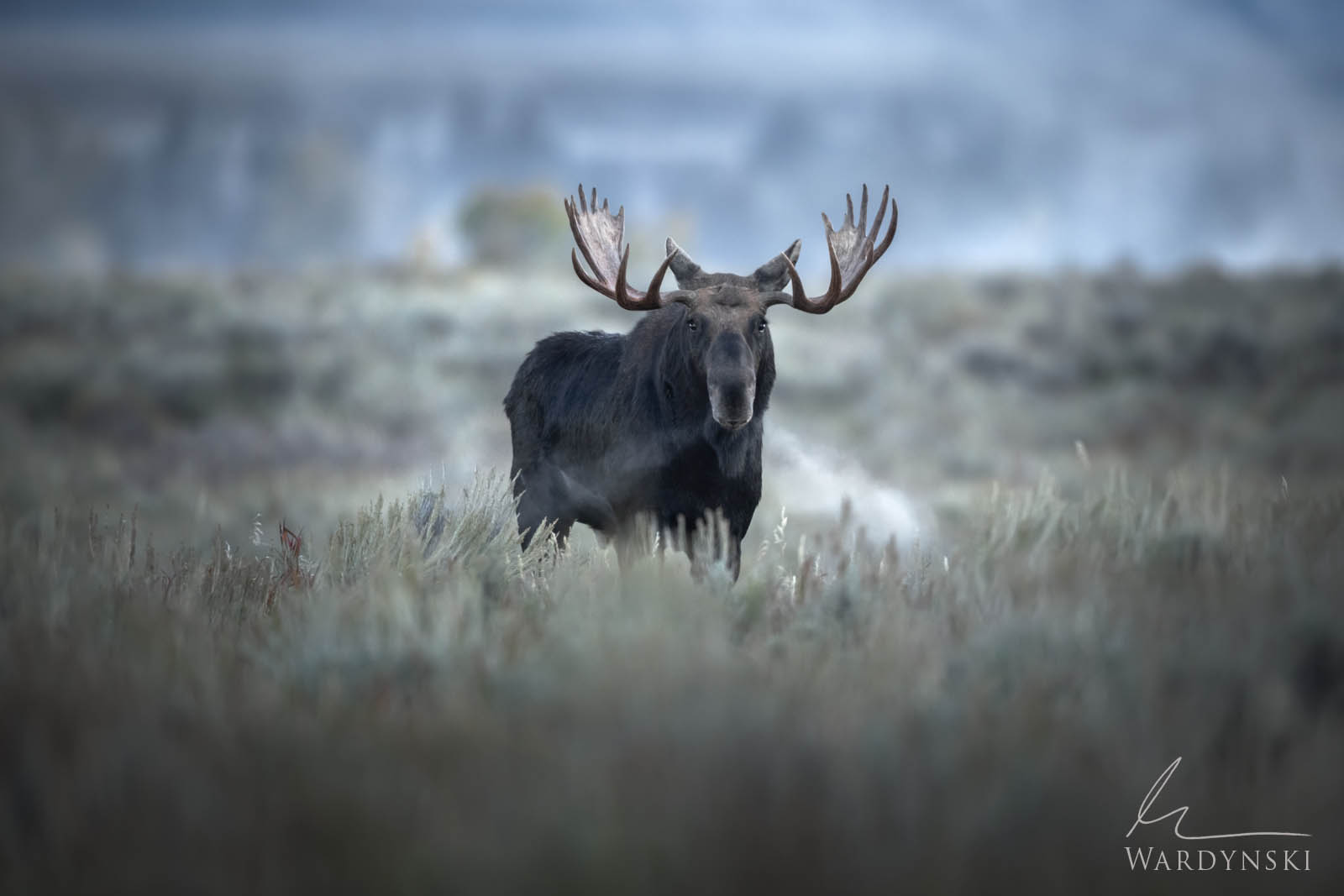
Don’t let distractions ruin your photographs. It is very easy to get so caught up in the moment that you forget to pay attention the background behind your subject. It’s very important to examine the entire scene, not just the subject! Keep an eye out for bright colors/tones, man-made objects, people, branches and other animals. When using a telephoto lens, distractions can often be eliminated by taking a few steps to the left or right. You can sometimes hide distractions behind your subject be moving your camera to a lower angle. Learning to watch out for distractions is one of the best ways to significantly improve your wildlife photography.
Consider Your Angle Of View
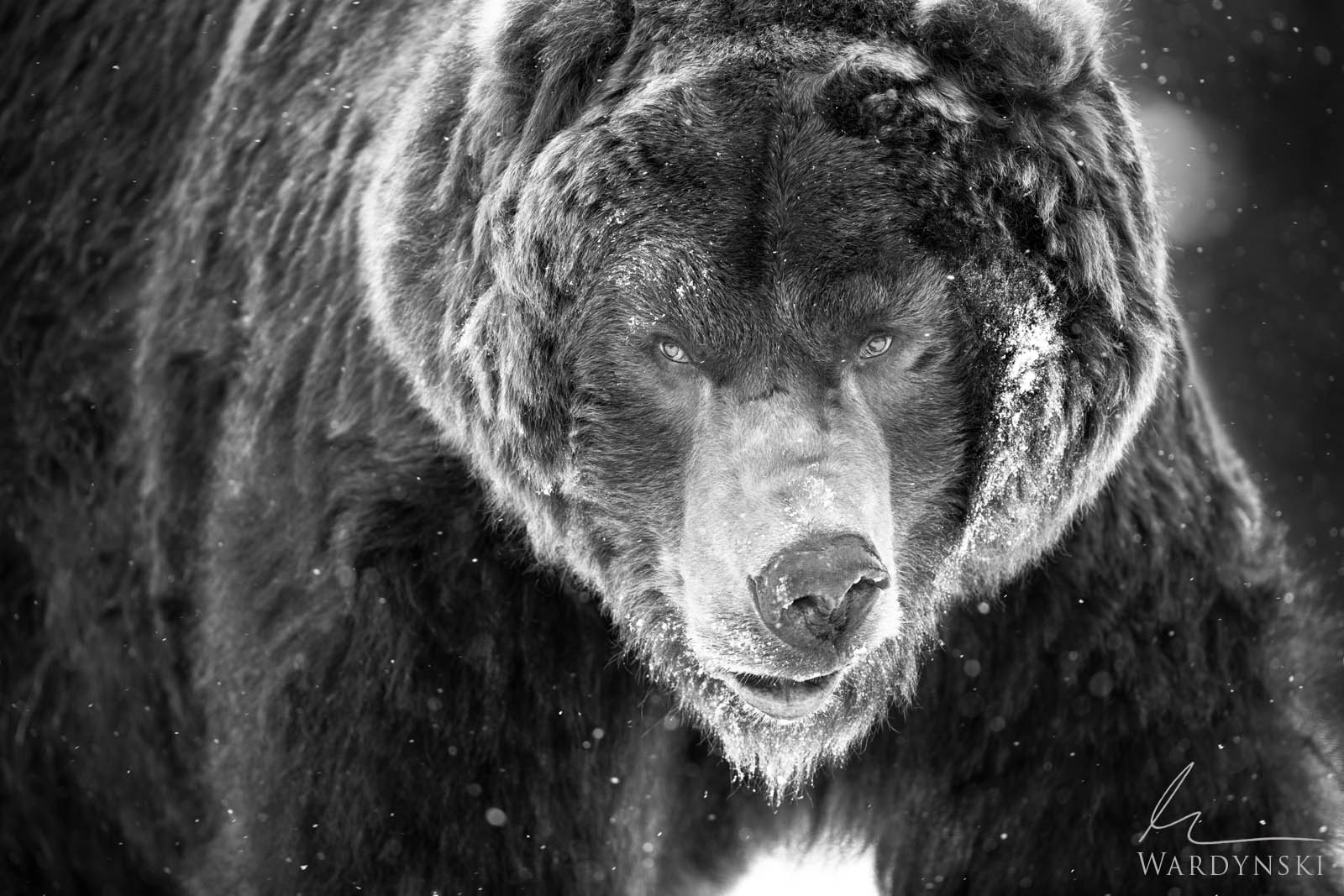
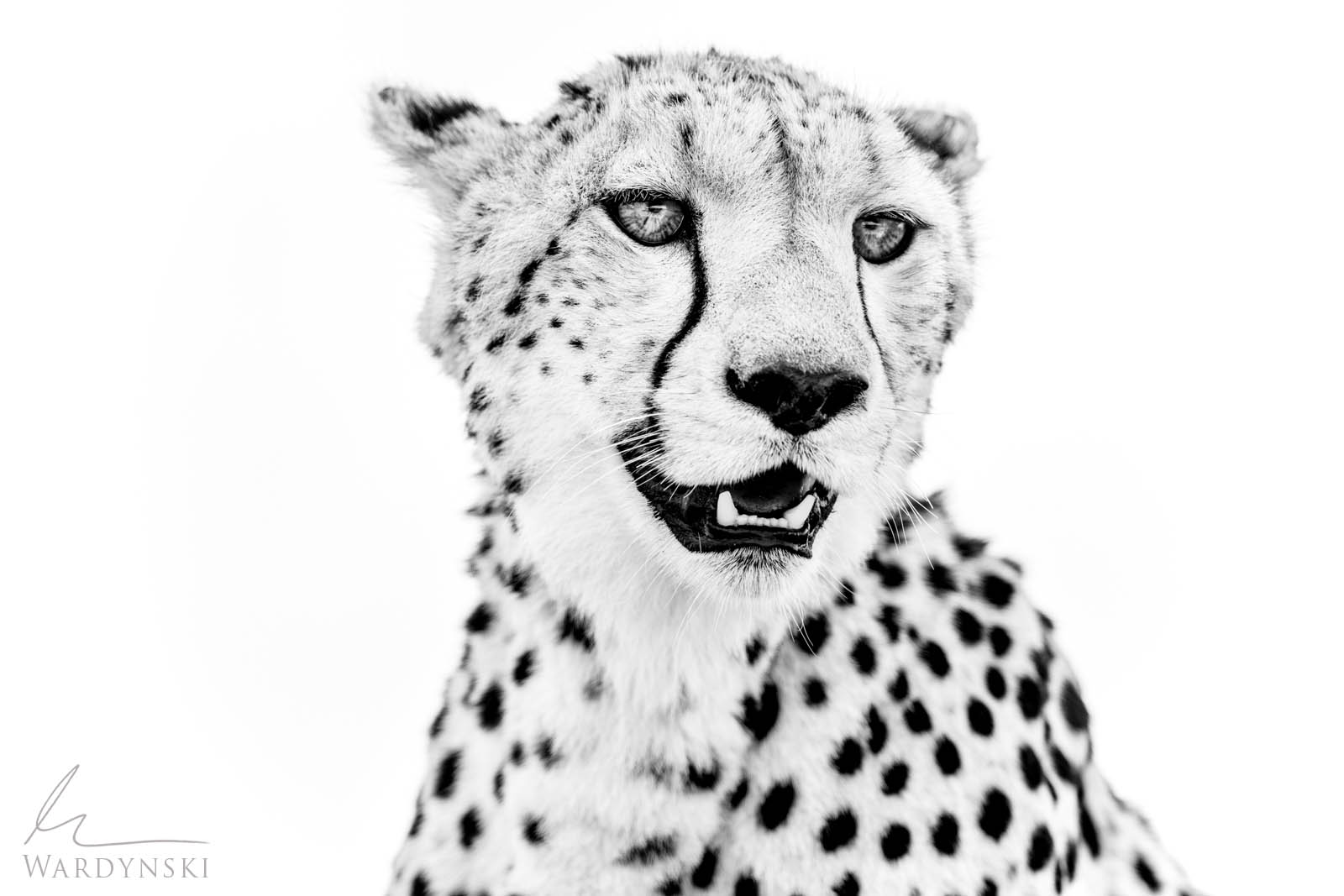
Pay attention to your camera angle when photographing wild animals. As upright beings, most of us are accustomed to seeing the world at five to six feet above the ground. By placing your camera low to the ground you create a perspective that humans are not used to viewing from. This low angle can create photographs that are on the animals level and can make large animals seem larger than life.
Alternatively, there may be times where you want to raise the camera as high as possible in order to cut out a distracting background or odd horizon line. If you are in a mountainous region, look around to see if there are any hills you can walk up to elevate your angle of view if needed.
Use Natural Light To Your Advantage
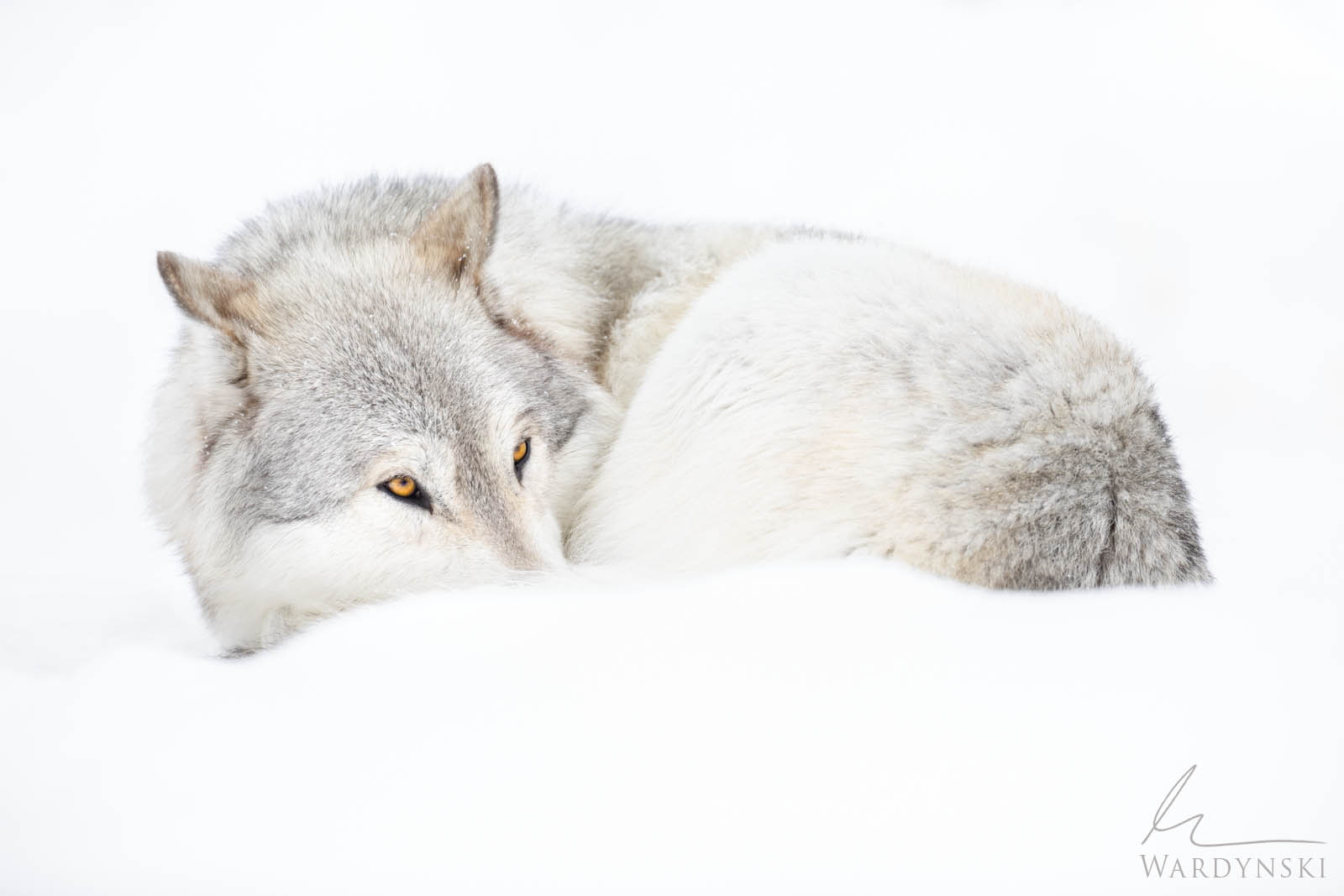
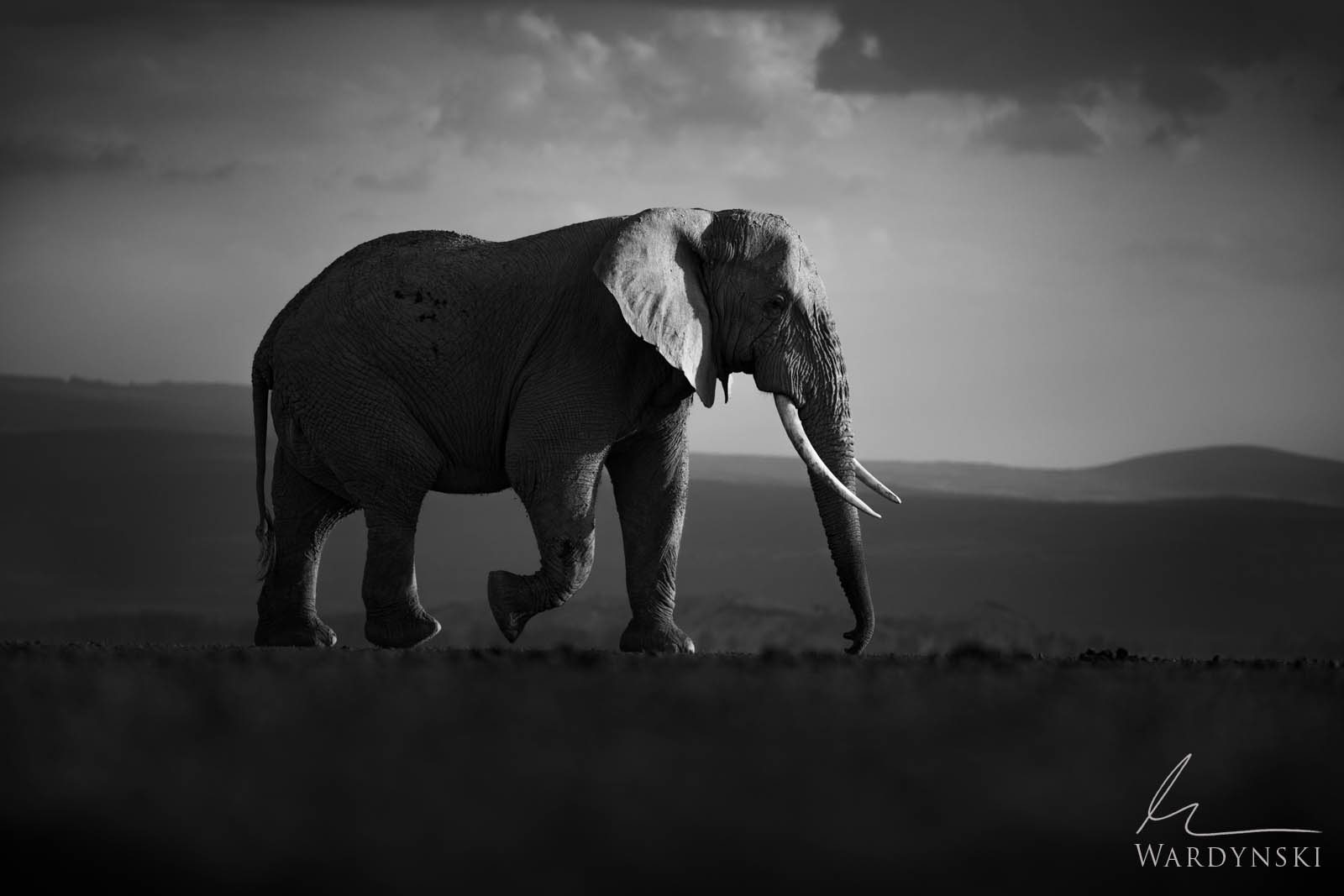
Learning how to see “good light” is an important skill for any outdoor photographer. Due to the nature of wildlife photography, You will not always be able to choose the best light for every subject but there will be times when you can maneuver around your subject to take advantage of the best light. In many cases, shooting with the light will be the easiest and offer great results but shooting your subject in side lighting can create dramatic shadows that work great for black and white images.
Backlight can also be an attractive option that many photographers forget about. Backlight is especially nice right at sunset and sunrise when the bright golden light wraps around you subject. When shooting a backlit subject, it can be ok to over expose the sky and background in some cases when you want to capture detail in the animal you are shooting. Silhouettes can be a good option when the sky is very dramatic at sunrise or sunset.
The Best Metering Modes For Wildlife Photography
If you’re shooting large environmental scenes, matrix / evaluative metering modes (same metering modes, different names) will most likely give you the best results because these modes evaluate the entire scene to give you an exposure reading. Matrix / evaluative metering are not perfect but are a good choice if you are uncertain which metering mode to choose.
Spot metering is a great choice for close up subjects and backlit subjects. Spot metering only reads from a single point in the image. If you spot meter on your subject then you are ensured that your subject will be properly exposed. Spot metering can often cause the background to overexpose in backlight situations but the over exposure can be a nice look as the glow of the light wraps around your subject.

Wildlife Photography Workshops by Wardynski Photo LLC
AF Drive Modes For Wildlife
Animals are highly unpredictable in most cases. You always want to be ready for the unexpected. It is recommended that you shoot in continuous / burst mode even if you do not anticipate action. New cameras can shoot at ridiculously fast burst rates with some cameras shooting as many as 30 frames per second. 30fps is way too fast for most scenarios because you will easily shoot thousands of photos in the matter of a few hours.
I would reserve 20 and 30 fps shooting for only the most unpredictable and fast-moving shooting scenarios. Shooting at an ultra-high burst rate will cause your camera’s buffer to fill quickly and will ultimately cause you to miss shots because you will not be able to shoot while the camera plays catchup.
10 to 15 fps is a much safer burst rate and plenty fast enough for most subjects. Some modern cameras allow you to change the number of shots that the camera takes in slow, medium and high burst rates.
Kenya Photography Workshop
The Best Shutter Speed For Wildlife Photography
As a general rule of thumb, you should try to shoot no slower than the focal length of the lens that you are using. This is especially true if you are shooting hand held. For example, if you are using a 600mm lens you should shoot no slower than 1/640th of a second. Ideally you would double the length of the lens and shoot at 1/1250th of a second if possible. If you are using a crop sensor camera you will have to multiply the lens focal length by 1.5x on Nikon, Sony and Fuji or 1.6x on Canon.
If your shutter speed is too slow, you either need to open up the aperture or increase the ISO. If you are already at the maximum aperture (low f number), the only option will be to increase the ISO.
If the animal is running or if you are panning, you’ll want to shoot at the fastest shutter speed possible. Since there are many variables that contribute to motion blur such as focal length, distance from lens and speed of subject there is not a magic number that I can give you that will work for every subject. In general, 1/500th of a second is pretty fast but often not fast enough to completely freeze a fast moving subject. 1/1000th to 1/2000th of a second will freeze motion much better. Again, the faster the better.
Ultra-fast shutter speeds are not always practical in low light though. One option you have in low light is to deliberately introduce blur into the image. You can do this by choosing a slow shutter speed and panning with your subject. The exact shutter speed that you need will be determined by your focal length and panning speed. Experiment with shutter speeds ranging from 1/6th to 1/125th of a second.
The Best Aperture For Wildlife
Aperture has two functions. It controls the amount of light coming in through the lens and it also controls the depth of field. The smaller the f-number the larger the aperture which means more light and shallower depth of field. Furthermore, depth of field shrinks with focal length, so f/8 at 600mm will result in a much shallower depth of field than f/8 at 50mm. Large apertures help blur the background and draw focus to your subject.
The appropriate aperture will depend on your desired look and number of subjects in the scene. If you have multiple subjects in the scene you may want to close down the aperture a few stops in order to try and increase the depth of field. With that being said, even small apertures will most likely not result in enough depth of field to achieve multiple sharp subjects when shooting with ultra-telephoto lenses. Having a soft animal in the frame is ok as long as the most prominent animal is sharp. When in doubt, open the aperture all of the way for increased light and shallow depth of field.
The Best Shooting Modes For Wildlife Photography
The best shooting mode for wildlife is subjective. There are a number of schools of thought for choosing the best shooting mode. Some photographers choose to shoot in aperture priority. Others choose to shoot in full manual while others shoot in manual mode with auto ISO enabled. Perhaps the best mode is the one that you’re most comfortable with.
MANUAL MODE WITH AUTO ISO
One of the best shooting mode choices for wildlife photography is to shoot in manual mode with auto-iso enabled. This will allow you to set the camera’s shutter speed and aperture so that they remain constant. The only changing variable will be ISO which will be dictated by the camera’s light meter. You can then use exposure compensation to increase or decrease the overall exposure.
Manual mode with auto-iso is one of the best choices for wildlife photography because your camera will always be ready to shoot without too much thinking as long as you have a fast shutter speed and open aperture programed in. It’s a good idea to program one of your camera’s custom shooting modes to a fast shutter speed such as 1/800th or 1000th of a second with a wide-open aperture and auto ISO.
APERTURE PRIORITY
In Aperture Priority Mode, you set the aperture and ISO and camera will automatically calculate the exposure using the shutter speed. Aperture priority is not entirely hands off though. When you shoot in aperture priority, you need to pay attention to the shutter speed that the camera chooses because a slow shutter speed will result in blurry photos. If you notice that you are shooting too slow, open up the aperture or increase the ISO.
FULL MANUAL MODE
If you shoot often and are comfortable shooting in manual mode, you might consider shooting in full manual mode. Full manual requires a large amount of attention and quick motor skills since you’ll be in full control of changing the cameras settings. The biggest benefit of full manual is that the camera settings will not change unless you manually tell the camera to do so. Shooting in manual mode prevents accidental camera setting changes due to light meter changes. The biggest weakness of full manual is that you may miss over or under expose shots If the light changes quickly and you do not compensate for the changing light.
Wildlife Lenses
The Best Lenses For Wildlife Photography
When it comes to wildlife photography, not all lenses are created equal. Animals are often most active in the early morning and late evening when the light is low. Using a fast lens will greatly increase your ability to shoot in low light. Most mid-priced and cheap lenses have a maximum aperture of f /5.6 and are often times much slower.
Every fraction of light matters when it comes to wildlife photography because every stop of light effectively doubles the shutter speed that you can shoot at. For example, f/4 is one stop faster than f/5.6. That might not seem like a lot but it’s the difference between shooting at 1/500th of a second and 1/1000th of a second. f/8 is two stops slower than f/4 and would result in a 1/250th of a second exposure which is certainly getting to the gambling stage of wildlife photography.
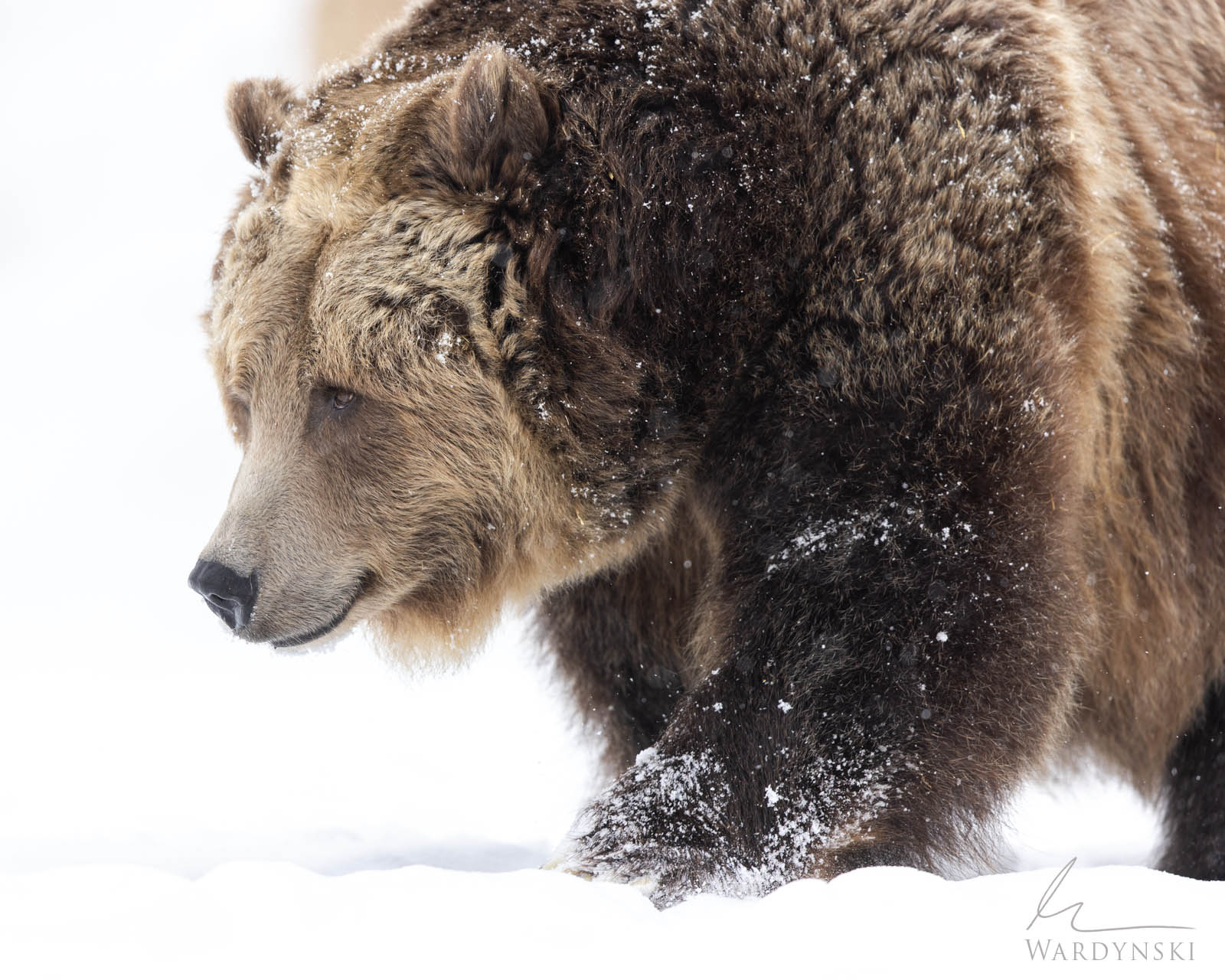
Image stabilization (IS) is very important when it comes to wildlife photography. Using a lens equipped with image stabilization will greatly improve your results when shooting handheld. Conventional wisdom says that image stabilization should be turned off then the camera is mounted to a tripod but ultra-telephoto lenses often pick up subtle vibrations from the wind and image stabilization can actually help, even when mounted to a tripod.
Cheap lenses can be tempting because of their attractive price tags but when you buy a cheap lens you are sacrificing aperture speed, autofocus speed and sharpness. There’s nothing worse than missing a shot because the lens would not focus on time. If you are serious about getting good wildlife shots, consider investing in a quality lens. Good prosumer telephoto zoom lenses are typically in the $2,000 to $3,000 price range and are good enough for most hobbyist photographers.
Prime telephoto lenses will be the fastest, sharpest and will be the quickest to focus but that quality will come with a very large price tag and these lenses tend to be large and somewhat heavy.
The Spray and Pray Wildlife Photography Method
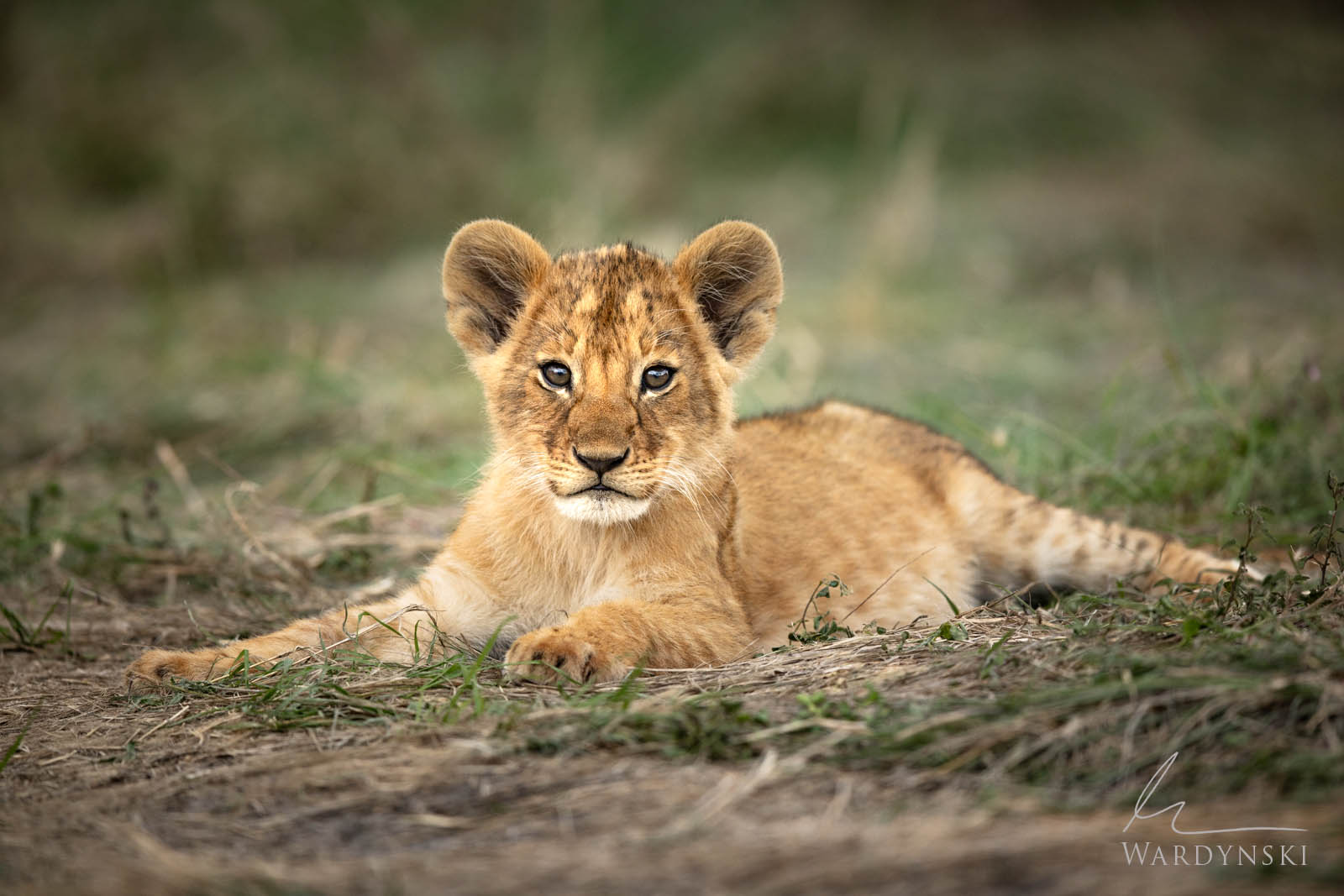
Sometimes there simply isn’t enough light to shoot at the shutter speed that you want. Luckily, there’s the spay and pray method that can sometimes save a low light wildlife shot. The idea behind the spray and pray method is that you intentionally shoot at a slow shutter speed to increase the amount of light hitting the camera’s sensor or film. In order to compensate for the slow shutter and blurry photos you shoot in a high-speed burst mode and hope that one of the images in the sequence is sharp. It’s certainly a bit of a gamble but it often works as long as the animal is not moving or moving slowly.
For example, if I’m shooting at 600mm in low light with a wide-open aperture, a high ISO of 6,400 and I’m still underexposed by a stop of light at 1/800th of a second, I can try to half my shutter speed to 1/400th of a second. This will give me a proper exposure but then I will need to shoot about five to six high speed bursts and hope that one of the images is sharp. It doesn’t always work but it certainly does some of the time and is worth trying in a pinch.
Autofocus and Wildlife
Focusing on the eye of your subject is of the most importance. Without a sharp focus on the eye of your subject, your shot is ruined, no matter how good the composition is. Most modern cameras are equipped with advanced autofocus features and It’s very important that you know how to navigate these features on your camera.
A single autofocus point or small crosshair AF point is great for stagnant or slow-moving subjects. By placing the AF point directly over the animal’s eye, you know that their eye will be in focus. Larger AF areas can often lock focus on the nose of an animal instead of the eye.
Many mirrorless cameras now have intelligent AF modes including animal eye detection. Eye detection modes make it much easier to focus on an animal’s eye when the feature works properly. Unfortunately, eye detection AF can fail to lock onto an animal’s eye causing you to miss the shot. For this reason, it is helpful to program your camera’s back buttons so you can easily switch between single pint AF and eye detection AF. The process for programming a camera’s buttons will vary from manufacturer to manufacturer. Here’s link to an article that I wrote about setting up the Canon R5ii.
Tripods & monopods – Image stabilization
Using a tripod or monopod will greatly increase the stability of your camera and lens. I always set up a tripod with a gimbal head when I know I have time to do so and I sometimes use a monopod if I need to be a little more mobile with a quicker setup time. If the light is decent and I’m traveling by vehicle, I’ll typically try to get a few handled shots before setting up a monopod or tripod. I do this because shooting handheld is the quickest option while allowing me the maneuverability. Some wildlife sightings only last a few seconds so I find that it is often best to get a few good shots in before wrestling with a tripod. A high ISO shot is always better than missing the shot because you were setting up a tripod. Click here for tripod and mono pod recommendations.
Black Rapid Camera Straps
Using two camera bodies will prevent the need to continually switch lenses and greatly increase your odds of nailing the shot because you can choose between two different lenses on the fly. I often start out shooting an animal in the distance with a 600mm lens but then end up switching to a 100mm-500mm or 200-400mm as it gets closer. I carry the two cameras by my side with a Black Rapid double camera strap and quick disconnect swivels. The quick disconnect plates allow me to quickly disconnect the camera from the strap and mount it to a tripod or monopod. NOTE: You must have a plate that is compatible with the quick disconnect system. Kirk and Really Right Stuff make some good options.
Conclusion
Getting great wildlife photographs takes practice and patience. If you thoroughly read this guide and practice the concepts within it, I’m confident that you’ll see an improvement in your wildlife photography. Remember that the best way to grow as a photographer is to practice the craft as often as possible. You don’t have to go to Africa to practice wildlife photography either. All you have to do is go to your backyard or local park. Practice photographing birds, squirrels and any other wildlife that you can find. You can even practice on your dog! If you don’t have a dog, try going to the beach or lake where dogs might be running around. There’s always an opportunity to practice wildlife photography when you put your mind to it.
Thanks for reading. Visit my workshops page to see all of my upcoming wildlife and landscape photography workshops.
Wildlife-Photography-Tips-For-Beginners-9